I’m not a New Year’s resolution person. I used to be and then I realized that I wanted to hit the restart button more often than every 365 days. So…my aim for this blog remains pretty much unchanged: Make research processes and ideas understandable for every RN.
Although “to be simple is difficult,” that’s my goal. Let me know what’s difficult for you in research, because it probably is for others as well. Let’s work on the difficult together so that you can use the BEST Evidence in your practice.
The 2019 journey begins today, and tomorrow, and the tomorrows after that!
FOR MORE: Go to PubMed. Search for a topic of interest. Send me the article & we’ll critique together.
Enjoy this 2+-minute, homegrown, YouTube video about our 7-year collaborative, EBP/research project recorded per request of a presenter at the Association for Nursing Staff Development conference. (I admit it’s intimidating to watch myself.)
Key points from our efforts: EBP/research learning should be fun. Content, serious!
The related publication that records some of our fun efforts and the full collaborative picture: Highfield, M.E.F., Collier, A., Collins, M., & Crowley, M. (2016). Partnering to promote evidence-based practice in a community hospital: Implications for nursing professional development specialists, Journal of Nursing Staff Development, 32(3):130-6. doi: 10.1097/NND.0000000000000227.
For RNs wanting to pursue a doctorate, it is important to pick a degree that best matches your anticipated career path. The shortest simplest explanation of the difference in these degrees is probably:
PhD – If you want to be a nurse scientist & teach in a university & conduct nursing research.
DNP– If you want to be an advanced practice nurse, who primarily uses research in leadership, QI, patient care, etc. along with measuring project outcomes.
Of course, some DNPs teach in universities, particularly in DNP programs. PhDs may otherwise be better prepared for faculty roles. I encourage you to look carefully at the curriculum at the school where you hope to study and expectations of a university where you hope to teach. Speak with faculty, & choose wisely.
Practice based in evidence (EBP) means that you must critique/synthesize evidence and then apply it to particular setting and populations using your best judgement. This means that you must discriminate about when (and when NOT) to apply the research. Be sure to use best professional judgment to particularize your actions to the situation!
Add to your repertoire of EBP tools,the Number Needed to Treat(NNT). This is not mumbo -jumbo. NNT explained here–short & sweet: http://www.thennt.com/thennt-explained/
The difference between research and evidence-based practice (EBP) can sometimes be confusing, but the contrast between them is sharp. I think most of the confusion comes because those implementing both processes measure outcomes. Here are differences:
RESEARCH :The process of research (formulating an answerable question, designing project methods, collecting and analyzing the data, and interpreting themeaning of results) iscreating knowledge(AKA creating research evidence).A research project that has been written up IS evidence that can be used in practice. The process of research is guided by the scientific method.
EVIDENCE-BASED PRACTICE: EBP is using existing knowledge (AKA using research evidence) in practice. While researchers create new knowledge,
The creation of evidence obviously precedes its application to practice. Something must be made before it can be used. Research obviously precedes the application of research findings to practice. When those findings are applied to practice, then we say the practice is evidence-based.
A good analogy for how research & EBP differ & work together can be seen in autos.
Creating a car!
Designers & factory workers create new cars.
Using a car!
Driversuse existing cars that they choose according to preferences and best judgments about safety.
CRITICAL THINKING: 1) Why is the common phrase “evidence-based research” unclear? Should you use it? Why or why not? 2) What is a clinical question you now face. (e.g., C.Diff spread; nurse morale on your unit; managing neuropathic pain) and think about how the Stetler EBP model at http://www.nccmt.ca/registry/resource/pdf/83.pdf might help. Because you will be measuring outcomes, then why is this still considered EBP.

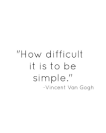 Although “to be simple is difficult,” that’s my goal. L
 et me know what’s difficult for you in research, because it probably is for others as well. Let’s work on the difficult together so that you can use the BEST Evidence in your practice.


 best matches your anticipated career path. The shortest simplest explanation of the difference in these degrees is probably:
 Practice based in evidence (EBP) means that you must critique/synthesize evidence and then apply it to particular setting and populations using your best judgement. This means that you must discriminate about when (and when NOT) to apply the research. Be sure to use best professional judgment to particularize your actions to the situation!
 CRITICAL THINKING: Check out this or other analyses at the site. How does the info on antihypertensives for mild hypertension answer the question of whether more is better? Are there patients in whom you SHOULD treat mild HTN? (“We report, you decide.”)
 meaning of results) is
 research evidence) in practice. While researchers create new knowledge,

