Where did those comments go??

Hi All out there in the nursing Research/EBP universe.

Notice that TO SEE COMMENTS on the blog post, there is a comments link under blogpost title.  In the most recent post, I added info in a comment about Scholar Scams.

Couldn’t resist sharing our beautiful flowers here in SoCal!

IMG_5965


Looks like a “Scholar Scam” to me! Caveat Emptor

Caveat emptor2Caveat Emptor! (“let the buyer beware”)   I got a string of emails that I suspect are phishing to get me to send $$$.  Does the emailer assume that I am in some sort of “publish or perish” greed mode?

The likely phisher got in touch with me via ResearchGate.  I love ResearchGate.  Seriously. It’s a great place to notify interested scholars of peer-reviewed work OR to post your work as ‘grey literature’ (i.e., “usually unpublished [work, including]… research reports, …evaluations, theses, dissertations, webcasts, poster sessions, presentations, conference proceedings, PowerPoint Presentations, etc..” per CSU/LB)

I christened the emails a “scholar scam.”  (Please disabuse me of this notion if you know better.)  First,I got an email asking if one of my ResearchGate-posted papers had been published. When I Scamanswered ‘no,’ I got a string of gmails  (not “.edu”) attempting to get me to add as author someone who is not an author, then with other requests.  Supposedly the advantage for me is to get help publishing.  Frankly, I don’t need the help. (If you do, please pick your own reputable scholar friends to assist.)

I suspect that the phisher wants to convince me to PAY with promises  of publication. The paying part would be real and the publication part likely imaginary.  (BTW: Anyone can pay to publish anytime without anyone else’s help.)  I was not yet asked for $$$, but if the emails continue, I expect that to come.

ummm….no thank you….Caveat Emptor!    

What do you think? Anyone else receive similar emails?-Dr.H

p.s. the article in question that is fulltext at ResearchGate – Highfield, MEF, Osterhues, DJ, & Chu, L. (2008) Religious & spiritual content in physical therapy curricula: A survey of U.S. program directors. Published on ResearchGate.

 

After taste…I mean “after test”

Let’s say you want to find out how well students’ think they learned theory in your class.

One option is to do a pre/post test: You distribute the same survey before and after the class asking them to rate on 1-4 scale how well they think they know the new material. Then you compare their ratings.

Another option is to do posttest only: You could give them a survey after the class that Surveyasks them to rate 1-4 their knowledge before the class and 1-4 their knowledge now. Then you compare their ratings.
One research option is stronger than the other.  Which one is it? and Why?  (hint: think retrospective/prospective)

2019: It is…….

I’m not a New Year’s resolution person.  I used to be and then I realized that I wanted to hit the restart button more often than every 365 days.  So…my aim for this blog remains pretty much unchanged:   Make research processes and ideas understandable for every RN.

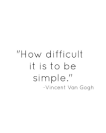
DifficultToBeSimpleAlthough “to be simple is difficult,” that’s my goalLjourneyet me know what’s difficult for you in research, because it probably is for others as well.  Let’s work on the difficult together so that you can use the BEST Evidence in your practice.

The 2019 journey begins today, and tomorrow, and the tomorrows after that!

FOR MORE: Go to PubMed. Search for a topic of interest. Send me the article & we’ll critique together.

Trick-or-Treater OR Trick or Treater?

Communication is critical to effective dissemination of findings. Enjoy this bit of communication know how!

(I have no conflict of interest related to this blogger or the writing service promoted at its end.)

Fun Methods. Serious Content.

Enjoy this 2+-minute, homegrown, YouTube video about our 7-year collaborative, EBP/research project recorded per request of a presenter at the Association for Nursing Staff Development conference.  (I admit it’s intimidating to watch myself.)

Check out the video: https://www.youtube.com/watch?v=T8KUIt_Uq9kfun frog

Key points from our efforts:  EBP/research learning should be fun.  Content, serious!  

The related publication that records some of our fun efforts and the full collaborative picture: Highfield, M.E.F., Collier, A., Collins, M., & Crowley, M. (2016). Partnering to promote evidence-based practice in a community hospital: Implications for nursing professional development specialists, Journal of Nursing Staff Development, 32(3):130-6. doi: 10.1097/NND.0000000000000227.

DNP vs. PhD: If the shoe fits….

For RNs wanting to pursue a doctorate, it is important to pick a degree that Glass slipperbest matches your anticipated  career path.   The shortest simplest explanation of the difference in these degrees is probably:

  1. PhD If you want to be a nurse scientist & teach in a university & conduct  nursing research. 
  2. DNP – If you want to be an advanced practice nurse, who primarily uses research in leadership, QI, patient care, etc. along with measuring project outcomes.

An excellent, free full-text, critique can be found at https://www.ncbi.nlm.nih.gov/pmc/articles/PMC4547057/  

Of course, some DNPs teach in universities, particularly in DNP programs.  PhDs may otherwise be better prepared for faculty roles.  I encourage you to look carefully at the curriculum at the school where you hope to study and expectations of a university where you hope to teach.  Speak with faculty,  & choose wisely.

It’s Up to you: Accept the Status Quo or Challenge it

Yes.  Change can be painful.question

Yes. It is easier to do things the way we’ve always done them (and been seemingly successful).

Yet, most of us want to work more efficiently or improve our own or patients’ health.Tension

 So, there you have the problem: a tension between status quo and change. Perhaps taking the easy status quo is why ‘everyday nurses’ don’t read research.

Ralph (2017) writes encountering 3 common mindsets that keep nurses stuck in the rut of refusing to examine new research:

  1. I’m not a researcher.
  2. I don’t value research.
  3. I don’t have time to read research.

But, he argues, you have a choice: you can go with the status quo or challenge it (Ralph).  And (admit it), haven’t we all found that the status quo sometimes doesn’t work well so that we end up

  • choosing a “work around,” or
  • ignoring/avoiding the problem or
  • leaving the problem for someone else or
  • ….[well….,you pick an action.]

TensionHow to begin solving the problem of not reading research? Think of a super-interesting topic to you and make a quick trip to PubMed.com. Check out a few relevant abstracts and ask your librarian to get the articles for you. Read them in the nurses’ lounge so others can, too.

Let me know how your challenge to the status quo works out.

Bibliography: Fulltext available for download through https://www.researchgate.net/ of  Ralph, N. (2017 April). Editorial: Engaging with research & evidence is a nursing priority so why are ‘everyday’ nurses not reading the literature, ACORN 30(3):3-5. doi: 10.26550/303/3.5

Research Words of the Week: Reliability & Validity

Reliability & validity are terms that refer to the consistency and accuracy of a quantitative measurement questionnaire, technical device, ruler, or any other measuring device.  It means that the outcome measure can be trusted and is relatively error free.

  • Reliability This means that the instrument measures CONSISTENTLY
  • Validity – This means that the instrument measures ACCURATELY. In other words it measures what it is supposed to measure and not something else.

For example: If your bathroom scale measures weight, then it is a valid measure of weight (e.g. it doesn’t measure BP or stress). You might say it had high validity. If your bathroom scale measures your weight as the same thing when you step on and off of it several times then it is measuring weight reliably  or consistently; and you might say it has high reliability.

Of Mice and Cheese: Research with Non-equivalent Groups

Reposting. Enjoy the review. -Dr.H

Martha "Marty" Farrar Highfield PhD RN's avatarDiscovering Your Inner Scientist

Last week’s blog focused on the strongest types of evidence that you might find when trying to solve a clinical problem. These are: #1 Systematic reviews, Meta-analyses, or Evidence-based clinical practice guidelines based on systematic review of RCTs; & #2 Randomized controlled trials. (For levels of evidence from strongest to weakest, see blog “I like my coffee (and my evidence) strong!”)

So after the two strongest levels of evidence what is the next strongest? #3 level is controlled trials without randomization. (Sometimes called quasi-experimental studies.)

Here’s an example of a controlled trial without randomization: I take two groups of mice and test two types of cheese to find out which one mice like best. I do NOT randomly assign the mice to groups. The experimental group #1 loved Swiss cheese, & the control group #2 refused to eat the cheddar. I assume confidently that mice LOVE Swiss cheese…

View original post 196 more words

Making research accessible to RNs