Tag Archives: nursing history

Hourly History: A Quick-Read Nursing & Health History Resource

Do you love historical research and wish you could read more?

Check out the 1-hour reads at Hourly History. A short biography of Florence Nightingale is among their reads. You can also sign up for free e-reads.

And remember…nursing & health history never happened (or happen) in a vacuum. Understanding the larger political, medical, geographical, adventurer, ideological, musical, art, philosophical, religious, cultural history (milieu) of any era is important, and these books can give quick insights. For example, Crimean or British leadership during Nightingale’s time will help you understand her and her contributions.

Check out one or more of these books, and let me know what you think. -DrH

Disclaimer: I have no financial or other interest in the Hourly History site or the books it promotes; and I cannot speak to their historical quality.

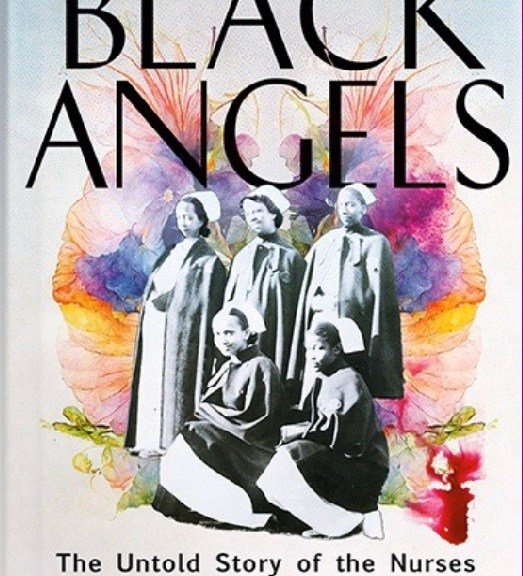
Oral History Research: “The Black Angels: The Untold Story of the Nurses who Helped Cure Tuberculosis”

Below is a YouTube recording of this week’s presentation from the Midwest Nursing History Research Center. The author presents an overview of her book and where you can learn more.

According to the Oral History Association:

Oral history is a field of study and a method of gathering, preserving and interpreting the voices and memories of people, communities, and participants in past events. Oral history is both the oldest type of historical inquiry, predating the written word, and one of the most modern, initiated with tape recorders in the 1940s and now using 21st-century digital technologies.

In Doing Oral History, Donald Ritchie explains, “Oral History collects memories and personal commentaries of historical significance through recorded interviews.  An oral history interview generally consists of a well-prepared interviewer questioning an interviewee and recording their exchange in audio or video format.  Recordings of the interview are transcribed, summarized, or indexed and then placed in a library or archives. These interviews may be used for research or excerpted in a publication, radio or video documentary, museum exhibition, dramatization or other form of public presentation. Recordings, transcripts, catalogs, photographs and related documentary materials can also be posted on the Internet.  Oral history does not include random taping, such as President Richard Nixon’s surreptitious recording of his White House conversations, nor does it refer to recorded speeches, wiretapping, personal diaries on tape, or other sound recordings that lack the dialogue between interviewer and interviewee.”

For thought: Whom within your circle could contribute to our healthcare history? What a wonderful contribution if you could collect their oral history using resources from the Oral History Association and elsewhere!!

Bates Center Seminar Series – Diabetes: A History of Race and Disease

Speaker: Arleen Tuchman, PhD, Vanderbilt University

Date and Time: Wednesday, April 6, 2022, 4:00pm EDT, virtual BlueJeans event

Abstract: Who is considered most at risk for diabetes, and why? In this talk, Tuchman discusses how, at different times over the past one hundred years, Jews, Native Americans, and African Americans have been labeled most at risk for developing diabetes, and that such claims have reflected and perpetuated troubling assumptions about race, ethnicity, and class. As Tuchman shows, diabetes also underwent a mid-century transformation in the public’s eye from being a disease of wealth and “civilization” to one of poverty and “primitive” populations. In tracing this cultural history, Tuchman argues that shifting understandings of diabetes reveal just as much about scientific and medical beliefs as they do about the cultural, racial, and economic milieus of their time.

Bio: Arleen Tuchman is a specialist in the history of medicine in the United States and Europe, with research interests in the cultural history of health, disease, and addiction; the rise of scientific medicine; and scientific and medical constructions of gender and sexuality. She is the author of three books, the most recent being Diabetes: A History of Race and Disease (Yale University Press, 2020). She is currently working on a history of addiction and the family in the United States.

Tuchman has held many fellowships, including ones from the American Council of Learned Societies, the National Institutes of Health, and the National Endowment for the Humanities.
Tuchman is a past director of Vanderbilt University’s Center for Medicine, Health, and Society (2006-2009) and has, since 2019, been the co-creator of a historic medicinal garden on Vanderbilt University’s campus

Register here.

“A Vivid Testimony”

“History provides current nurses with the same intellectual and political tools that determined nursing pioneers applied to shape nursing values and beliefs to the social context of their times. Nursing history is not an ornament to be displayed on anniversary days, nor does it consist of only happy stories to be recalled and retold on special occasions. Nursing history is a vivid testimony, meant to incite, instruct, and inspire today’s nurses as they bravely tread the winding path of a reinvented health care system.” (American Association for History of Nursing)

SHINING A LIGHT ON THE PRESENT AND FUTURE

We need nurse historians–those researchers who can help us understand the present and future by examining the past!

ebook cover

MY PROJECT just published (amazon/apple books/kindle): A Time to Heal: Missionary Nurses in Churches of Christ, Southeastern Nigeria (1953-1967). I like to think of the work as accessible history told from the point of view of those who lived it. A take-away for me from their story is: Don’t let your current inexperience or limited knowledge stop you from doing the good you see to do.

MORE INFO: Check out the resources of the American Association for History of Nursing. “Talking History” events online are the current norm, so check them out and join us.

Sat Jan 23, 2021Webinar | Public Health and DisasterCategory: Webinar
Fri Jan 29, 2021PhD Student Networking CallCategory: Events
Sat Feb 20, 2021Webinar | Midwifery and RaceCategory: Webinar
Fri Mar 19, 2021Webinar | Nursing EductationCategory: Webinar
Fri Apr 16, 2021Webinar | War and NursingCategory: Webinar

Useful…but not enough!

Homemade masks: 1918 & 2020

This Op Ed from Am Assoc for History of Nursing website by Marian Moser Jones
University of Maryland School of Public Health
moserj@umd.edu

Check it out & share your perspective: https://www.aahn.org/home-made-masks–useful-but-not-enough-in-1918–useful-but-not-enough-now

Nightingale: Avant garde in meaningful data

In honor of Nurse Week, I offer this tribute to the avant garde research work of Florence Nightingale in the Crimea that saved lives and set a precedent worth following.

Nightingale was a “passionate statistician” knowing that outcome data are convincing when one wants to change the world.  She did not merely collect the data, but also documented it in a way that revealed its critical meaning for care.

As noted by John H. Lienhard (1998-2002): Nightingale coxcombchart“Once you see Nightingale’s graph, the terrible picture is clear. The Russians were a minor enemy. The real enemies were cholera, typhus, and dysentery. Once the military looked at that eloquent graph, the modern army hospital system was inevitable.  You and I are shown graphs every day. Some are honest; many are misleading….So you and I could use a Florence Nightingale today, as we drown in more undifferentiated data than anyone could’ve imagined during the Crimean War.” (Source: Leinhard, 1998-2002)

As McDonald (2001) writes in the BMJ free, full-text,  Nightingale was “a systemic thinker and a “passionate statistician.”  She insisted on improving care by making policy & care decisions based on “the best available government statistics and expertise, and the collection of new material where the existing stock was inadequate.”(p.68)

Moreover, her display of the data brought its message home through visual clarity!

Thus while Nightingale adhered to some well-accepted, but mistaken, scientific theories of the time (e.g., miasma) her work was superb and scientific in the best sense of the word.   We could all learn from Florence.

CRITICAL THINKING:   What issue in your own practice could be solved by more data?  How could you collect that data?   If you have data already, how can you display it so that it it meaningful to others and “brings the point home”?

FOR MORE INFO:

HAPPY NURSE WEEK TO ALL MY COLLEAGUES.  

MAY YOU GO WHERE THE DATA TAKES YOU!