
In a prior blog (Direct speaking about INdirect outcomes: HCAHPS as a measurement*), I argued that HCAHPS questions were indirect measures of outcomes. Indirect measures are weaker than direct measures because they are influenced by tons of variables that have nothing to do with the outcome of interest. But wait!! There’s more! HCAPS can sometimes be a DIRECT measure; it all depends on what you want to know.
(If you know this, then you are way ahead of many when it comes to measuring outcomes accurately!!)
 KEY POINTS:
- If your research question is what do patients remember about hospitalization then HCAHPS is a DIRECT measure of what patients remember.
- However if your research question is what did hospital staff actually do then HCHAPS is an INDIRECT* measure of what staff did.
What is HCAHPS? HCAHPS (pronounced “H-caps”) questions are patient perceptions of what happened, which may or may not be what actually happened. Patients are asked to remember their care that happened in the past, and memories may be less than accurate. (See this link for more on what HCAHPS is: http://www.hcahpsonline.org/Files/HCAHPS_Fact_Sheet_June_2015.pdf )
Example: HCAHPS question #16 is, “Before giving you any new medicine, how often did hospital staff tell you what the medicine was for?” Whether the patient answers yes or  no, the response tells us only how the patient remembers it.
Why is this important?
- Because if you want to know whether or not RNs actually taught inpatients about their medications, then for the most direct & accurate measure you will have to observe RNs .
- However, if you want to know whether patients remember RNs teaching them about discharge medications, then HCAHPS question #16 is one of the most direct & accurate measure of what they remember.
*FOR MORE INFORMATION on why you want to use DIRECT measures  see https://discoveringyourinnerscientist.com/2016/11/04/direct-speaking-about-idirect-outcomes-hcahps-as-a-measurement/
CRITICAL THINKING: Pick any HCAHPS question at this link and write a research question that for which it would be a DIRECT outcome measure:  (http://www.hcahpsonline.org/files/March%202016_Survey%20Instruments_English_Mail.pdf)
For your current project, how are you DIRECTLY measuring outcomes?


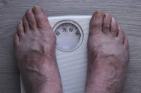 You don’t merely ask them how much they weigh
  en directly measure how many patients started using it after you started your intervention and their pain scores.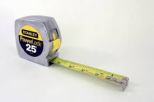

 workplace compassion influence patient perceptions?

 On the experimental unit RNs stated the script to patients exactly as written and on room whiteboards posted the script, last pain med & pain scores. Posters of the script were also posted on the unit. In contrast, on the control unit RN communication and use of whiteboard were dependent on individual preferences. Researchers measured effectiveness of the script by collecting HCAHPS scores 2 times before RNs began using the script (a baseline pretest) and then 5 times during and after RNs began using it (a posttest) on both units.
 Critical thinking? What would prevent you from adopting or adapting this script in your own personal practice tomorrow? What are the barriers and facilitators to getting other RNs on your unit to adopt this script, including using whiteboards? Are there any risks to using the script? What are the risks to NOT using the script?