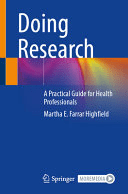
Chapter 1 notes 12 tips and tricks for beginning researchers to start and finish a clinical research study. Three are to take baby steps, to consider descriptive research as your first project, and to use a protocol template from an institutional review board (IRB) to plan your study.
Check out the book, or my earlier blogpost that is a primer on descriptive studies earlier blog post, or “read sample” from Doing Research on amazon.com
This book provides a step-by-step summary of how to do clinical research. It explains what research is and isn’t, where to begin and end, and the meaning of key terms. A project planning worksheet is included and can be used as readers work their way through the book in developing a research protocol. The purpose of this book is to empower curious clinicians who want data-based answers.
Doing Research is a concise, user-friendly guide to conducting research, rather than a comprehensive research text. The book contains 12 main chapters followed by the protocol worksheet. Chapter 1 offers a dozen tips to get started, Chapter 2 defines research, and Chapters 3-9 focus on planning. Chapters 10-12 then guide readers through challenges of conducting a study, getting answers from the data, and disseminating results. Useful key points, tips, and alerts are strewn throughout the book to advise and encourage readers.
Practical, brief, and affordable,Doing Research is for residents, nurses, chaplains, and other clinicians.
Written in informal, friendly style, this book makes the difficult simple.
The purpose of Doing Researchis to empower curious clinicians to conduct research alongside a mentor, even when they lack prior research experience or formal training.
Doing Research presents practical steps for conducting a study from beginning to end. It begins with “a dozen tips” to get started, then moves to study planning, conduct, and dissemination of results. A worksheet to write your research plan (protocol) is included. Research terms and process are explained, including what research is and is not. Tips & Alerts provide a “reassuring voice,” as well as alerting readers to common missteps.
How to use this info? After you gather literature on a topic, use this information to organize it from strongest evidence to the weakest. Then write your review of literature starting with the strongest first!
FULL TEXT ONLINE:Adv Emerg Nurs J. 2011 Oct-Dec;33(4):354-8. doi: 10.1097/TME.0b013e318234ead3. [note: Below is full text excerpt from AENJ summary was published in DYIS blog 16 Dec 2016]
Abstract
The purpose of this article is to examine the strength of evidence regarding our holiday Santa Claus (SC) practices and the opportunities for new descriptive, correlation, or experimental research on SC. Although existing evidence generally supports SC, in the end we may conclude, “the most real things in the world are those that neither children nor men can see” (Church, as cited in Newseum, n.d.).
ARE HOLIDAY Santa Claus (SC) activities evidence based? This is a priority issue for those of us who’ve been nice, not naughty. In this article, I review the strength of current evidence supporting the existence of SC, discuss various applications of that evidence, and suggest new avenues of investigation.
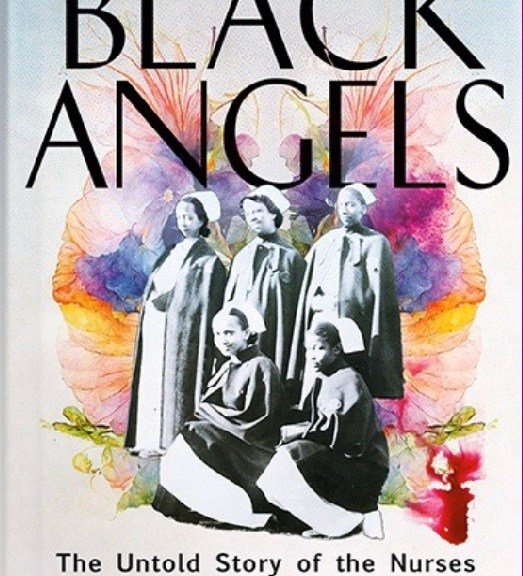
Below is a YouTube recording of this week’s presentation from the Midwest Nursing History Research Center. The author presents an overview of her book and where you can learn more.
Oral history is a field of study and a method of gathering, preserving and interpreting the voices and memories of people, communities, and participants in past events. Oral history is both the oldest type of historical inquiry, predating the written word, and one of the most modern, initiated with tape recorders in the 1940s and now using 21st-century digital technologies.
In Doing Oral History, Donald Ritchie explains, “Oral History collects memories and personal commentaries of historical significance through recorded interviews. An oral history interview generally consists of a well-prepared interviewer questioning an interviewee and recording their exchange in audio or video format. Recordings of the interview are transcribed, summarized, or indexed and then placed in a library or archives. These interviews may be used for research or excerpted in a publication, radio or video documentary, museum exhibition, dramatization or other form of public presentation. Recordings, transcripts, catalogs, photographs and related documentary materials can also be posted on the Internet.“ Oral history does not include random taping, such as President Richard Nixon’s surreptitious recording of his White House conversations, nor does it refer to recorded speeches, wiretapping, personal diaries on tape, or other sound recordings that lack the dialogue between interviewer and interviewee.”
For thought: Whom within your circle could contribute to our healthcare history? What a wonderful contribution if you could collect their oral history using resources from the Oral History Association and elsewhere!!
UVA Bjoring Center for Nursing History Forum”Narrating a Life of Care: Hindsight, Omission, and Ambiguities of Interpretation in the History of Religion and Health”
Angela Xia October 24, 2023
12 p.m. (ET) on Zoom
Hosted by the UVA Bjoring Center for Nursing Historical InquiryZoom link: : https://virginia.zoom.us/j/93585126052?pwd=YzBxZ0V3ZGd2ZElvSGpTWWUxZ0V5Zz09 Meeting ID: 935 8512 6052 Passcode: 590924 Doctoral candidate Angela Xia will share findings from her dissertation research on religion, aging, and end of life care in the modern U.S., focusing on the lives of three women of color in the fields of elder and palliative health. In addition to their professional roles as health-care practitioners, what makes these three women — nurse Dr. Rita Kathleen Chow, palliative social worker Dr. Bernice Catherine Harper, and hospice oncologist Dr. Josefina Bautista Magno — distinct are the self-proclaimed connections between their religious identities and their philosophies of care, connections established in self-narrated sources such as memoir, autobiography, interviews, or reminiscences from colleagues and friends. What can such sources tell historians of religion and medicine about the relationship between a care practitioner’s religious subjectivity and their work? What effects do phenomena such as hindsight, omission, recalcitrance, devotion, or revision have on how such relationships are depicted? With such questions in hand, Angela’s talk will explore what it means to narrate a life of care with care.
Angela Xia is a scholar of religion and health in the modern U.S. and a Ph.D. candidate in the Department of Religious Studies at the University of Pennsylvania. Her dissertation, “The Rest of Life: Care and Aging in American Churches, 1970-2000,” offers the first historical account of how American religious leaders, educators, and care providers took up age as a matter of shared concern in the latter half of the 20th century. Her research has been supported by the Barbara Bates Center for the Study of the History of Nursing, the Bjoring Center for Nursing Historical Inquiry, and the Consortium for the History of Science, Technology, and Medicine.
We hope you can join us! Maura Singleton Center Manager Eleanor Crowder Bjoring Center for Nursing Historical Inquiry
Dr. Guian McKee will speak about his new book, Hospital City, Health Care Nation, which recasts the story of the U.S. health care system by emphasizing its economic, social, and medical importance in American communities. Focusing on urban hospitals and academic medical centers, the book argues that the country’s high level of health care spending has allowed such institutions to become vital economic anchors for communities. Yet that spending has also constrained possibilities for comprehensive health care reform over many decades. At the same time, the role of hospitals in urban renewal, in community health provision, and as employers of low-wage workers has contributed directly to racial health disparities. McKee points to the increased role of financial capital after the 1960s in shaping not only hospital growth but also the underlying character of these vital institutions. The book shows how hospitals’ quest for capital has interacted with structural racism and inequality to constrain the U.S. health care system. Dr. McKee is a professor of presidential studies at the UVA Miller Center. He is co-chair of the Presidential Recordings Program and co-directs its Health Care Policy Project. His 2023 book, Hospital City, Health Care Nation, is available through the University of Pennsylvania Press. We hope you can tune in! Maura Singleton Center Manager Eleanor Crowder Bjoring Center for Nursing Historical Inquiry
QUICK REVIEW: Research design is the overall plan for a study. And…there are 2 main types of design: 1) Non-experiments in which the researcher observes and documents what exists,
and 2) Experimentswhen the researcher tries out an intervention and measures outcomes.
NEW INFO: Two non-experimental research designs that are often confused with one another are: 1) cohort studies & 2) case studies. Epidemiologists often use these designs to study large populations.
In a cohort study, a group of participants, who were exposed to a presumed cause of disease or injury, are followed into the future (prospectively) to identify emerging health issues. Researchers may also look at their past (retrospectively) to determine the amount of exposure that is related to health outcomes.
In contrast, in a case controlled study, participants with a disease or condition (cases) and others without it (controls) are followed retrospectively to compare their exposure to a presumed cause.
CRITICAL THINKING: Do you work with a group that has an interesting past of exposure to some potential cause of disease or injury? Which of the above designs do you find more appealing and why?