Tag Archives: research

New Antibiotic Found in Human Nose

Useless trivia, but interesting old quote from a detective on the ancient “Alvin & the nOSEChipmunks” cartoon: “Everyone with a nose knows the nose knows everything.” 

Check out the very interesting story about a new antibiotic that may fight MRSA and VRE.  A much needed medicinal weapon.  Still lots we don’t know about how well it will work in humans and resistance to it or other unintended consequences.

Want more info? See this article by By Kai KupferschmidtJul. 27, 2016   http://www.sciencemag.org/news/2016/07/new-antibiotic-found-human-nose

Critical thinking: What do you already do to avoid adding to microbial resistance?


Self-Report Data: “To use or not to use. That is the question.”

[Note: The following was inspired by and benefited from Rob Hoskin’s post at http://www.sciencebrainwaves.com/the-dangers-of-self-report/]Penguins

If you want to know what someone thinks or feels, you ask them, right?

The same is true in research, but it is good to know the pros and cons of using the “self-report method” of collecting data in order to answer a research question.  Most often self-report is done in ‘paper & pencil’ or SurveyMonkey form, but it can be done by interview.

Generally self-report is easy and inexpensive, and sometimes facilitates research that might otherwise be impossible.  To answer well, respondents must be honest, have insight into themselves, and understand the questions.  Self-report is an important tool in much behavioral research.

But, using self-report to answer a research question does have its limits. People may tend to answer in ways that make themselves look good (social desirability bias), agree with whatever is presented (social acquiescence bias), or answer in either extreme terms (extreme response set bias) or always pick the non-commital middle Hypothesisnumbers.  Another problem will occur if the reliability  and validity of the self-report questionnaire is not established.  (Reliability is consistency in measurement and validity is the accuracy of measuring what it purports to measure.) Additionally, self-reports typically provide only a)ordinal level data, such as on a 1-to-5 scale, b) nominal data, such as on a yes/no scale, or c) qualitative descriptions in words without categories or numbers.  (Ordinal data=scores are in order with some numbers higher than others, and nominal data = categories. Statistical calculations are limited for both and not possible for qualitative data unless the researcher counts themes or words that recur.)

Gold_BarsAn example of a self-report measure that we regard as a gold standard for clinical and research data = 0-10 pain scale score.   An example of a self-report measure that might be useful but less preferred is a self-assessment of knowledge (e.g., How strong on a 1-5 scale is your knowledge of arterial blood gas interpretation?)  The use of it for knowledge can be okay as long as everyone understands that it is perceived level of knowledge.

Critical Thinking: What was the research question in this study? Malaria et al. (2016) Pain assessment in elderly with behavioral and psychological symptoms of dementia. Journal of Alzheimer’s Disease as posted on PubMed.gov questionat http://www.ncbi.nlm.nih.gov/pubmed/26757042 with link to full text.  How did the authors use self-report to answer their research question?  Do you see any of the above strengths & weaknesses in their use?

For more information: Be sure to check out Rob Hoskins blog: http://www.sciencebrainwaves.com/the-dangers-of-self-report/


Telling the Future: The Research Hypothesis

What is a research hypothesis?   A research hypothesis is a predicted answer; an educated guess.  It is a statement of the outcome that a researcher expects to find in an experimental study.Hypothesis

Why care?  Because it tells you precisely the problem that the research study is about!  Either the researcher’s prediction turns out to be true (supported by data) or not!
A hypothesis includes 3 key elements: 1) the population of interest, 2) the experimental treatment, & 3) the outcome expected.  It is a statement of cause and effect. The experimental treatment that the researcher manipulates is called the independent or cause variable.  The result of the study is an outcome that is called the dependent variable because it depends on the independent/cause variable.

For example, let’s take the hypothesis “Heart failure patients who receive exmeds2perimental drug X will have better cardiac function than will heart failure patients who receive standard drug Y.”  You can see that the researcher is manipulating the drug (independent variable) that patients will receive.  And patient cardiac outcomes are expected to vary—in fact cardiac function is expected to be better—for patients who receive the experimental drug X.

Ideally that researcher will randomly assign subjects to an experimental group that receives drug X and a control group that receives standard therapy drug Y.   Outcome cardiac function data will be collected and analyzed to see if the researcher’s predicted answer (AKA hypothesis) is true.

In a research article, the hypothesis is usually stated right at the end of the introduction or background section.

If you see a hypothesis, how can you tell what is the independent/cause variable and the dependent/effect/outcome variable?question   1st – Identify the population in the hypothesis—the population does not vary (& so, it is not a variable).   2nd – Identify the independent variable–This will be the one that is the cause & it will vary.  3rd – Identify the dependent variable–This will be the one that is the outcome & its variation depends on changes/variation in the independent variable.

PRACTICE:  What are the population, independent variable(s) & dependent variable(s) in these actual research study titles that reflect the research hypotheses:

FOR MORE INFORMATION:  See SlideShare by Domocmat (n.d.) Formulating hypothesis at http://www.slideshare.net/kharr/formulating-hypothesis-cld-handout


Stand & Deliver: Evidence for Empathy in Action

Patient Pain Satisfaction.  It’s a key outcome of RN empathy in action.CARE

Imagine that you are hospitalized and hurting.   During hourly rounds the RN reassures you with these words:We are going to do everything that we can to help keep your pain under control. Your pain management is our number 1 priority. Given your [condition, history, diagnosis, status], we may not be able to keep your pain level at zero. However, we will work very hard with you to keep you as comfortable as possible.” (Alaloul et al, 2015, p. 323).

Study? In 2015 a set of researchers tested effectiveness of the above pain script using 2 similar medical-surgical units in an academic medical center—1 unit was an experimental unit & 1 was a control unit.  RNs rounded hourly on both units.  handsOn the experimental unit RNs stated the script to patients exactly as written and on room whiteboards posted the script, last pain med & pain scores.  Posters of the script were also posted on the unit.   In contrast, on the control unit RN communication and use of whiteboard were dependent on individual preferences.  Researchers measured effectiveness of the script by collecting HCAHPS scores 2 times before RNs began using the script (a baseline pretest) and then 5 times during and after RNs began using it (a posttest) on both units.
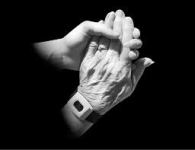
Results? On the experimental units significantly more patients reported that the team was doing everything they could to control pain and that the pain was well-controlled (p≤.05). And while experimental unit scores were trending up, control unit scores trended down. Other findings were that the RNs were satisfied with the script, and that RNs having a BSN or MSN had no effect.

Conclusions/Implications?When nurses used clear and consistent communication with patients in pain, a positive effect was seen in patient satisfaction with pain management over time. This intervention was simple and effective. It could be replicated in a variety of health care organizations.” (p.321) [underline added]

Commentary: While an experiment would have created greater confidence that the script caused the improvements in patient satisfaction, an experiment would have been difficult or impossible.  Researchers could not randomly assign patients to experimental & control units.  Still, quasi-experimental research is relatively strong evidence, but it leaves the door open that something besides the script caused the improvements in HCAHPS scores.

questionCritical thinking? What would prevent you from adopting or adapting this script in your own personal practice tomorrow?  What are the barriers and facilitators to getting other RNs on your unit to adopt this script, including using whiteboards?  Are there any risks to using the script?  What are the risks to NOT using the script?

Want more info? See original reference – Alaloul, F., Williams, K., Myers, J., Jones, K.D., & Logsdon, M.C. (2015).Impact of a script-based communication intervention on patient satisfaction with pain management. Pain Management Nursing, 16(3), 321-327. http://dx.doi.org/10.1016/j.pmn.2014.08.008

“That is so random!” But is it Representative?

What makes a good sample in research?  One thing.  And it isn’t random selection.  (Surprised?)

Portrait of a diversity Mixed Age and Multi-generation Family embracing and standing together. Isolated on white background. [url=http://www.istockphoto.com/search/lightbox/9786738][img]http://dl.dropbox.com/u/40117171/group.jpg[/img][/url]It is representativeness.  No matter how the sample was picked, it must be representative of all those in the larger population, if the researcher wants to say anything about anyone who wasn’t in the study.  Now, of course, it is true that random selection is more likely to give you a representative sample, but it is no guarantee.  Only likely.

What is random sampling?  It is when every member of the larger population has an equal chance of being selected for the study sample.  Example? Drawing names out of a hat.  It is well-accepted practice to generalize research results from a random sample to others like those being studied (assuming that all other aspects of the study are strong).

In contrast a convenience (or nonprobability) sample is when some people are more likely to be chosen to be in the study than others.  You shouldn’t generalize the results of these studies because the samples may Not represent others.

Example of when random sampling doesn’t work: Let’s say you have a mixture of red, green, & yellow apples, and you select a sample that has only yellow apples.  (The red & green ones are going to be offended!–They’re left out.)  You now have a sample that is biased in favor of yellow apples!   Your sample does Not represent the larger population of apples…even if you used random methods to get it.  If you want to apply the study to red & green & yellow apples…well….you must get some of them in your sample, too. The yellow apples might not be at all like the other types and studying just yellow might mislead you into thinking something about the red & green ones that isn’t true!   Of course you could study all the millions of apples in the world and exclude none, but that would be pretty cumbersome and expensive.   So, it’s better to go for a representative sample!

When else doesn’t random sampling create a representative sample?   If I am doing historical research, say on the Nursing Department at California State University/Northridge, then I want to hand pick the specific RNs by name who were in charge of the Department from the beginning.  Randomly selecting nurses from those who worked at the University won’t represent those leaders.

QUESTIONCritical Thinking:  Take a quick look at the linked abstracts. How were the samples selected?  How representative are the samples of a larger population of interest?  Could you generalize the results to other people, and if so to whom?

Want more information on sampline? Check this out.  It takes < 5 minutes:

https://www.youtube.com/watch?feature=endscreen&v=be9e-Q-jC-0&NR=1

“Watch & Learn!” – Systematic Reviews of Non-experimental Studies

Today’s top tip: Want to find the strongest research evidence for your project?   Go to http://www.ncbi.nlm.nih.gov/pubmed & add the strongest type of research designs as one of your search terms. For example, add the terms meta-analysis or systematic review to your other search terms. **********************************************

Now to the new!  What is a systematic review of descriptive studies? [Note: For information on stronger levels of research “I like my coffee (and my evidence) strong!)]Cat Fishbowl2

First, remember that in a descriptive study, the researcher merely watches or listens to see what is happening. Descriptive studies do not test interventions.

Second, a systematic review (not to be too silly) is a review that is done systematically in order to include all literature on a particular topic . The authors will tell us where they searched for studies, what search terms they used, and what years they searched. That way we can feel sure that all relevant articles are included.

Therefore, in a systematic review of descriptive studies the authors

  • Collect non-experimental studies related to the problem they are trying to solve,
  • Critically review them, &
  • Write up that analysis for you and me.

You won’t see a lot of numbers or statistics in these reviews of non-experimental studies.

Systematic review of descriptive studies are weaker than other levels of evidence in part because they are critical reviews of non-experimental studies in which the researchers only observed subjects. Those non-experimental studies that they are reviewing may be quantitative with results reported in numbers or qualitative with results reported in words.

Here’s an example with results reported in words (qualitative): Yin, Tse, & Wong (2015) systematically reviewed studies for what factors affect RNs giving PRN opioids in the postop period.   They searched publications 2000-2012 and ended up with 39 relevant studies. Within those 39 articles were descriptive studies that identified 4 basic influences on opioid PRN administration by RNs to postop patients: “(i) nurses’ knowledge and attitudes about pain management; (ii) the situation of nurses’ work practices in administrating range orders for opioid analgesics; (iii) factors that influenced nurses’ work practices; and (iv) perceived barriers to effective pain management from the nurse’s perspective.” [note: In this study a few of the 39 studies were experimental in which something was done to subjects and then outcomes measured, and Yin et al., commented separately on what those showed.]

Critical thinking: What are key differences between a meta-analysis of randomized controlled trials and a systematic review of QUESTIONdescriptive studies?

Reference found with search terms: review of descriptive studies nursing pain – Yin, H.H.,Tse, M.M., & Wong, F.K. (2015). Systematic review of the predisposing, enabling, and reinforcing factors which influence nursing administration of opioids in the postoperative period. Japan Journal of Nursing Science, doi: 10.1111/jjns.12075.


Cohort & Case-controlled studies: Going forward & backward

Got a clinical problem?  You probably want to solve it with evidence—STRONG evidence.   Click on this link to see one well-accepted hierarchy from strongest #1 to weakest #7 (Melnyk & Fineout-Overholt, 2005).   Today let’s look at the 4th strongest level of evidence = Case controlled or cohort studies

First a quick review

Click here for a quick review of the strongest 2 levels of evidence (#1 Systematic reviews, Meta-analyses, or Evidence-based clinical practice guidelines based on systematic review of RCTs. #2 Randomized controlled trials)

Click here for a review of the 3rd strongest type of evidence (#3Controlled trials without randomization)

Now on to the new “stuff”  strong

All 3 of the top, strongest levels of evidence are experimental studies (or include available experimental studies). That means the researcher actually does something or gives a treatment to some of the subjects and then records the outcomes. 

The weaker 4 levels of evidence are non-experimental designs. This means that the researcher merely observes & does Not do anything to subjects. So how does that work?!

First, a cohort study (non-experimental). A cohort study starts with a group of people who have something in common and then the researcher observes only & keeps collecting data from them over a long time into the future. Data collection into the future is called a prospective study. An example is the Nurses’ Health Study, in which over 20,000 nurses were identified and followed-up annually with tests and surveys for over 25 years (this study is still ongoing). These studies provide very valuable information, but are obviously very expensive and time-consuming.”(OMERAD EBM course, 2008)

Now a case-controlled study (non-experimental).  In a case controlled study the researcher observes only & collects data over time into the past (not the future). Data collection into the past is called a imagesCAH6C8NTretrospective study. Again, from the OMERAD EBM (2008) site this example: “Patients with a disease are identified who have suffered a bad outcome such as death or recurrence, and compared with patients who have the disease but haven’t suffered the bad outcome. For example, a researcher might  identify a group of breast cancer patients who have died…, and compare them with a similar group of patients with breast cancer who are still living.”

Critical thinking: Which of these would be better for casQUESTIONe-controlled study and which for cohort study.

  1. You are a runner in the Los Angeles marathon and you are interested in how that race can improve cardiovascular health among those who finish. Question: Cohort or Case controlled?
  2. Some finishers of the LA marathon die of heart attacks 20 years later; many survive another 40 years.   Question: Cohort or Case controlled?

For more info see:


How to Re-Invent the Wheel (NOT!!)

You can avoid re-inventing the wheel by checking in with top notch wheelexperts who have already examined the practice problem that you face.

In other words, it’s time to head to the library. After all that’s what the library is: the experiences and research written down by experts, who have spent a lot of time thinking about the same problem that you are facing. Really it’s pretty amazing that we have access to health professionals all over the world who are eager to help you avoid re-inventing the wheel.imagesCAGYW6WB

The best experts in the field are talking directly to you through their publications!

Of course it’s important to ask your colleagues in your own and other institutions about their ideas on the problem, but that’s not enough. You will be limited by what they happen to know; or worse you will be limited by what they don’t happen to know! Nurses on your floor can provide practical, site-specific insights, but it’s easy to see why you would want to add newest information from the top experts. That is BEST evidence.

Remember: EBP = Best evidence + Clinical judgment + Patient/family preferences/values

HOW do you find the experts in the library?

  1. The first step is to identify KEY WORDS from your PICO.
  2. Use single words or put phrases in parenthesis in your list of words (e.g., “postoperative ileus”). A librarian can help with key words, too.
  3. Google the site PubMed (PubMed is a complete database of healthcare publications)
  4. In the search box at the top of the PubMed page, type in your key words
  5. You will get a list of articles on your topic (and some related articles on the right side)
  6. Click on the box beside the ones that you want & email that list tocomputers shaking hands your facility librarian with a request to pull the complete articles for you! (Of course if you are a student with some direct access to full-text articles in a school library, then it may be quicker to get them on your own. It’s up to you, but part of your “village that it takes” might be the librarian.) [See “Take five!” if you want more on to why PubMed beats Google Scholar.]

EXAMPLE: Let’s get specific….

  • Take this problem that we have discussed before:
    • P = Postoperative patients with ileus (Population or Problem)
    • I = Gum chewing postop (Intervention to try out)
    • C = NPO with gradual diet progression when bowel sounds start returning (Comparison intervention)
    • O = Reduce time of postop ileus with sooner return to nutritious eating (Outcome that you want)
  • What are some key words from the above PICO stated problem? “Postoperative ileus” adults “gum chewing”
  • Go ahead. Pull up PubMed. Paste in the key words You should get 11 articles about gum chewing & postoperative ileus. Check the boxes of the ones you want, then…
  • Click on the “SEND TO” link near the upper right corner of the screen and email the list to the librarian with a request for full-text of the articles. (You can send to yourself, too)
  • Congratulate yourself on an EBP literature search well-started!

CRITICAL THINKING: Why wouldn’t you simply use google.com to find expert opinions?  [If you want more “data”  related to this question.  Check out“Take five!”]

FOR MORE INFO: Check out this tutorial on how PubMed works & what’s in it http://www.nlm.nih.gov/bsd/disted/pubmedtutorial/020_010.html You pay for PubMed through your taxes—get your $$ worth!


You Got A Problem With That? Try PICO*

IF….

  • The Purpose of evidence-based practice (EBP) =  BEST PATIENT CARE, &
  • The Definition of EBP = Best evidence + Clinical judgment + Patient/Family preferences & values

THEN…How do I get started with EBP to improve patient care?

One of the 1st steps is to identify clearly the clinical issue that needs solving.   One way to do that is by using PICO.*

WHAT IS PICO?   PICO is an acronym to help you clarify the clinical problem & to help you prepare to search the literature for evidence

  • P = Patient population or problem
  • I = Intervention or treatment that you want to try out & is based in best evidence
  • C = Comparison intervention or treatment (This might be some standardized care on your unit; or un-standardized care given by individual nurses based on their individual expertise)
  • O = Outcome you want to achieve.

EXAMPLE:  Let’s say you work with post-op patients and want to speed up patients’ return of normal GI function.  Right now on your unit, patients are NPO post-op progressing to ice chips and so on as their bowel sounds start returning.  But you have 2 concerns: a) some patients’ GI function seems quite slow to return; & b) quicker return to a nutritious diet may speed healing.  You read an article that gum chewing can reduce the time of postoperative ileus.  With that information, here is how your PICO problem would look:

  • P = Postoperative patients with ileus
  • I = Gum chewing postop
  • C = NPO with gradual diet progression when bowel sounds start returning
  • O = Reduce time of postop ileus with sooner return to nutritious eating

CRITICAL THINKING: Now you try it.  What is problem for patients (or nurses) on your unit? Try writing it out in a sentence or two and then put it into PICO format.  You are now on your way with beginning an EBP project that will promote the very BEST PATIENT CARE.

*Note: Some use PICOT that includes “T”.  The “T” stands for the time it will take to show an outcome.  Because the timing does not seem to me relevant to all questions I typically omit it, but you may find it helpful.  If so, use it!


EBP: What’s the point? & What is it anyway?*

The next few blogs will focus on how to improve your nursing practice by finding & using the best evidence.

  • 1st– What is the point or goal of evidence-based practice (EBP)? Best patient care.
  • 2nd– What is the definition of Evidence based Practice (EBP)?

Evidence-based Practice (EBP) =

Best evidence(research &/or nonresearch) +

Clinical Expertise +

Patient/family preferences & values

(See http://guides.mclibrary.duke.edu/c.php?g=158201&p=1036021 for more.)

  • 3rd– What should I do step-by-step to use the best evidence in order to give BEST patient care? At Dignity NHMC we use the Iowa model as a step-by-step guide (Titler et al, 2001). (Other readers should check to see if their hospital has adopted a model that they should follow.)   NHMC employees can find a copy of the Iowa model reprinted with permission and other information at S:\Everyone\everyone\EVIDENCE BASED PRACTICE-RN Scientist Role.  Additionally NHMC employees can contact the nursing EBP/research facilitator at martha.highfield@dignityhealth.org or extension 3339 for questions or one-to-one help.
  • What is the general process of EBP?Most models include the following elements:
  1. Identify clearly the clinical issue that needs solving.Maybe this is a problem that you’ve encountered in your practice, or maybe it is something you heard about from a colleague or journal. For example, what is the best way to manage injection pain in children?
  2. Find the best evidence. Research is typically regarded as best evidence.  When no research has been done on the topic we can still use expert opinions, case studies, and scientific principles.
  3. Critique the strength of the evidence. This is figuring out how much confidence you have that the research studies are coming to the right conclusions.  If you’re not sure, an NP or CNS could help or point you to another mentor.
  4. Combine (synthesize) all evidence.When research study outcomes contradict each other, then we have to look at which studies are most carefully done.  Again an APN can help.
  5. Write clinical recommendations for your settingbased on best evidence+clinical expertise+patient/family values & preferences.
  6. Try out (or pilot) the clinical recommendationsin your setting using clinical judgment and patient/family preferences and values.
  7. Evaluate the outcomes.
  8. PRN “tweak” your recommendations to improve outcomes& roll out the project to other units if appropriate.
  9. Reinforce the “new & improved” evidence-based practiceso that it is sustained.
  10. Monitor outcomes.

CRITICAL THINKING:  What is one patient-care issue that you think can be improved on your unit?  For example: Reducing post-op ileus? Cutting down on nighttime noise on the unit? Dealing with nurses’ potential alarm fatigue?  Other?   Write the problem out.  Writing it out makes you think it through more clearly so don’t just think it—write it.  Then, STAY TUNED next blog for more on clarifying the problem.

Reference: Titler, M.G., Kleiber, C., Steelman, V.J., Rakel, B.A., Budreau, G., Everett, L.Q., Buckwalter, K.C., Tripp-Reimer, T., Goode, C.J. (2001) The Iowa Model of Evidence-Based Practice to Promote Quality Care. Critical Care Nursing Clinics of North America, 13(4), 497-509.

*The next few blogs will focus more on how to use research in practice (commonly known as Evidence-based Practice)