Category Archives: Evidence based nursing

!!Here they come to save the day!! Toolbox to move from paper to practice

toolsOk, so you found some GREAT, new & improved clinical guidelines that exactly fit the problem that you are trying to solve on your unit.   Now What???   How do you get from the guidelines from paper to practice?  & How do you know that the guidelines are any good any way?   Where are the tools for all this?MightyMouse

Like the old cartoon Mighty Mouse, here comes the Registered Nurses Association of Ontario to save the day!  (cue the music)   You can download a FREE toolkit.  Yes, that’s right.  FREE.

It comes complete with examples & step-by-step instructions.  Check it out!   And if I haven’t been persuasive enough, here’s the table of contents!   This is waaay cooool.  Don’t miss it.

For more info here’s the site to downloadhttp://rnao.ca/bpg/resources/toolkit-implementation-best-practice-guidelines-second-edition

RNAO toolkit download

ZIKA: Evidence-based clinical guidelines to prevent sexual transmission

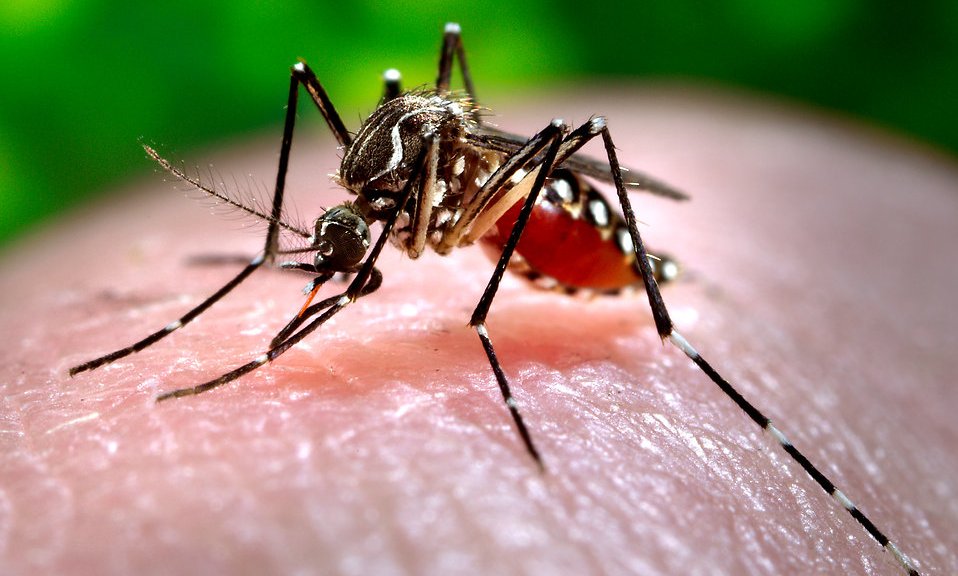
As  you probably know Zika is already causing problems in an area outside of Miami, FL. CDC has taken the unusual step of issuing a travel warning there. 16743-close-up-of-a-mosquito-feeding-on-blood-pv

Accurate clinician and patient information in the U.S. will become more critical, and your advice to others could save lives as the disease spreads.

imagesCALQ0QK9Some of the best evidence on what to teach is from CDC.  These experts have reviewed the best available literature and developed these clear  evidence-based clinical guidelines to
prevent sexual transmission of Zika
.  Such evidence-based guidelines are considered very STRONG evidence--some of the strongest out there!! (For more see: “I like my “I like my coffee (and my evidence) strong!”)

Note that I point out, as do they, that these guidelines are based on the best available evidence which continues to evolve.  (It wasn’t that long ago when experts denied that Zika could be sexually transmitted.  Now we know better.)

what so what what nextScientific evidence is not static. It is dynamic and ever evolving.  This is not a problem with science, but is part of its very nature–that of discovery.

Why this matters: Clinicians should continue to educate all patients about ZIKV sexual transmission risk, to conduct testing for all persons with possible sexual exposure, and to report all cases of ZIKV to local health authorities” (CDC, 2016).

Critical thinking: How might you use this information at work or with the broader public?question

For more information: Check out CDC Zika Virus webpage 


Zika Virus: What we know and do not know (O’Malley, 2016)

The public and lots of nurses have lots of questions.   Our evidence-based knowledge is evolving.  Here’s some of the latest (Aug/July 2016).

You can set up a free account with Lippincott to access this 3 page article that translates current research into practice for you.

O’Malley – Zika virus: What we know and do not know: 16743-close-up-of-a-mosquito-feeding-on-blood-pvhttp://www.nursingcenter.com/pdfjournal?AID=3570052&an=00002800-201607000-00005&Journal_ID=54033&Issue_ID=3569996

New Antibiotic Found in Human Nose

Useless trivia, but interesting old quote from a detective on the ancient “Alvin & the nOSEChipmunks” cartoon: “Everyone with a nose knows the nose knows everything.” 

Check out the very interesting story about a new antibiotic that may fight MRSA and VRE.  A much needed medicinal weapon.  Still lots we don’t know about how well it will work in humans and resistance to it or other unintended consequences.

Want more info? See this article by By Kai KupferschmidtJul. 27, 2016   http://www.sciencemag.org/news/2016/07/new-antibiotic-found-human-nose

Critical thinking: What do you already do to avoid adding to microbial resistance?


Strong nursing leadership is essential to evidence-based practice

priority“The Institute of Medicine (IOM) set a goal that, by 2020, the majority of healthcare practices and decisions would be evidence-based.Yet…only three percent of the executive-level nurse leaders surveyed ranked EBNP as a top priority at their own organizations. What’s worse, more than half said EBNP is practiced at their organizations only “somewhat” or “not at all.”  Posted on July 19, 2016HTimothy  at American Sentinel.   

For full text see the source link: http://www.americansentinel.edu/blog/2016/07/19/strong-nursing-leadership-is-essential-to-evidence-based-practice/

Critical Thinking: Given all the demands of the healthcare questionenvironment, how can we make this goal happen.   

Who ya gonna call? Myth Busters!!

MYTH: There is no real payoff in engaging  patients and families.

FACT:  Health care organizations can reap many benefits fromMythBUSted
“activated” patients and families – those who have the knowledge, skills and confidence to manage their own care.

How does engaging patients help?   1) It may increase quality of life by reducing falls, helping patients learn to manage chronic conditions. 2) It can reduce Underuse or Overuse of health services. 3) It may increases reimbursement through improved HCAHPS scores.  And YOU may be more satisfied at work!

TWO EXAMPLES of positive results yielded from partnering with patients and families:
• One hospital that began involving patients and families in safety efforts after a highly publicized preventable death saw a culture shift that improved medication reconciliation and eliminated fatal medication errors during a 10-year period (Johnson & Abraham; Reinersten et al., 2008).
Satisfaction• A health system that began seeking input from patients and families decreased nurse turnover from 15 percent to 5 percent in three years and improved patient, staff and physician satisfaction (Johnson & Abraham).

WHAT CAN I DO TO ENGAGE PATIENTS?  Listen to your patients to identify their level of activation in their care as described, & communicate in ways that move them to the nextNURSEPatient level.

  • At stage 1, people do not yet grasp that they must play an active role in their own
    health, they may still believe that they can just be a passive recipient of care….
  • At stage 2, people may lack the basic facts or have not connected the facts into a larger understanding about their health or recommended health regimens….
  • At stage 3, people have the key facts and are beginning to take action but may lack confidence and skill to support new behaviors….
  • At stage 4, people have adopted new behaviors but may not be able to maintain them in the face of life stress or health crises.”  [source: Hibbard et al. at http://www.ncbi.nlm.nih.gov/pmc/articles/PMC1955271/]

mythVStruth

FOR MORE INFO, check out the source of above:  Busting the Myths about Engaging Patients and Families in Patient Safetyquestion

CRITICAL THINKING: Think of a strategy that you ALREADY use or that you might start using to move patients up the stages of engagement in their own care. Be specific!

Afraid to Relieve Pain? You may have Opiophobia

fear5In pain management are you afraid to give comfort to your patients with appropriate medications?   Are you afraid to be comforted when in pain?  Have you encountered families or care partners, who are afraid to comfort their loved one in pain by giving pain medications?

In a classic 2002 qualitative study, “Fearing to Comfort,” Zerwekh, Riddell, & Richard identified that RNs, physicians, patients, families, and health systems were afraid to relieve pain with appropriate use of pain medications.  They were Not doing evidence-based practice, but fear-based practice. barrier

Fear barriers include, but are not limited to 1) patients’ fear of addiction, fear of distracting the MD from the main treatment plan, and loss of control; 2) MDs’ avoiding the needs of the dying, fear of rewarding drug-seekers, or equating pain management with euthanasia; 3) RNs’ avoiding pain, failing to switch to palliative goals at end of life,  and fear of killing the patient; 4) families’ fears of addiction, side effects, & killing their loved one; and 5) health facilities’ not giving unique consideration to those at end of life, inadequate staffing, & time constraints (Zerwekh et al., 2002).

This is an issue because irrational problems cannot be simply solved by giving rational Pain fistinformation.   We have to find evidence-based practices that can create a change of heart, if you will.  As Zerwekh et al wrote: “Because fear is so influential in decisions to keep pain under control, palliative educational approaches must go beyond providing information to fill deficits in palliative knowledge.”
We must learn evidence-based ways to overcome fear and control pain.  Why?  Because pain interferes with living life.  Who are we protecting when we fear appropriate pain medications?  Not the patient.

FearRemedy?  Palliative care education must confront the fears and remove them through cognitive restructuring that includes learning to question beliefs about addiction etc.  Role playing, role modeling, and an expert walking through this with the provider or family who is afraid.  Beyond this helping people to recognize their own fears of pain & death, and providing the very best available information on pain management (Zerwekh et al).

CRITICAL THINKING:  Have you been afraid?  Or seen others afraid?  How can you solve this problem using evidence-based practice that = BEST available evidence + Clinical judgment + Patient/family preferences & values? Be specific because if you haven’t yet encountered the problem of fearing to comfort, be assured that you will.fear4
FOR MORE INFORMATION:   Read full text Zerwekh et al (2002) online.   It could change your life & the life of those for whom you care!!

“IT’S A PAIN!” Use Evidence to Address Pain Management Myths

A new threat has emerged in evidence-based management of pain control.  Fear.

Evidence-based practice for pain control has 3 elements:  BEST available evidence + Clinical judgment + Patient/care partner values and preferences.

In the concern over opioid abuse by some patients & professionals, some federal agencies and nonprofits are suggesting that The Joint Commission (TJC) is inadvertently at fault (http://hosted.ap.org/dynamic/stories/U/US_PAINKILLERS_PAIN_MEASURES?SITE=AP&SECTION=HOME&TEMPLATE=DEFAULT).  HCAHPS questions are also under suspicion.

Pain fistWhile I am not an apologist either for TJC or HCAHPS, my fear is that the government/involved nonprofit fears ignore the data: pain relief is still inadequate for some patients, professionals often under-medicate or don’t believe patients, and some patients have pain crises.  Limiting opioids only to certain diagnoses undercuts evidence-based care.

As a professional RN, you need to check out the best available evidence yourself, use your judgment, and Question1practice pain assessment & management safely. We knowIdea2 that asking patients about suicidal intent does not cause them to commit suicide.  Does asking patients about pain cause them to have it or to treat pain they don’t have?  Hmmm…..

Here are the current TJC standards:  1) The hospital educates all licensed independent practitioners on assessing and managing pain. 2) The hospital respects the patient’s right to pain management. 3) The hospital assesses and manages the patient’s pain.”

Check out this link for truth about the following 5 myths identified by TJC about their standards:  http://www.jointcommission.org/joint_commission_statement_on_pain_management/

  • Myth#1: The Joint Commission endorses pain as a vital sign…. Vital sign
  • Myth #2: The Joint Commission requires pain assessment for all patients….
  • Myth #3: The Joint Commission requires that pain be treated until the pain score reaches zero….
  • #4: The Joint Commission standards push doctors to prescribe opioids.
  • OxycodoneMyth #5: The Joint Commission pain standards caused a sharp rise in opioid prescriptions. This claim is completely contradicted by data from the National Institute on Drug Abuse.”…  [Source=TJC link above]

Of course, RNs & the health team can always do things better, and the above concerns Hypothesissuggest that we might need new studies. I hope only that we won’t jump on the fear bandwagon.   Keep practice EVIDENCE BASED, listen to patient/carepartner preferences & values, & use your judgment.  

CRITICAL THINKING:  How do you assess patient pain?  How could you improve?  How do you apply TJC standards in your setting?

FOR MORE INFORMATION: Do you know what the TJC pain standards are?  Check out the 5 myth link above.


“What Difference Does it Make?” Plenty when it comes to Posters!

Congratulations—You and your team have completed a project!   

Now what?   Disseminate your work of course so that others can learn.  A poster is a great way to do this. Dissemination is a key step in research & evidence-based practice.  

But how should you present the information on your poster?  To quote a well-known
politician:  “What difference does it make”
how you hILARYpresent your  project in a poster.   Quite a bit, it turns out!   Some posters are definitely better than others.
For your poster you want to realize that you are dealing with a VISUAL medium, not text.  This means that you need:

  • A CLEAR FOCUS on the key ideas & results
  • CONTENT THAT FLOWS. You want to make sure the reader is guided through the poster–maybe by numbering steps or adding arrows.
  • Enough “WHITE SPACE” that the readers eye has time to “rest” and that draws attention to your focus. (e.g., think “Got Milk?” in bold white letters on a black background.  White space =any color blank space.)
  • USE VISUAL Employ short phrases, bullet points, active voice, and graphics that take advantage of the visual medium.   Some people say 50% should be graphics.


OK

For example, let’s look at 3 different ways that you could present your pretend research study on RN attitudes to electronic health records (EHR).   The NOVICE POSTER-MAKER may put the following on their poster:

“RN attitudes toward the new electronic health record were examined in a pretest, and class was taught on how to use the electronic health record.   After the class a posttest of their attitudes was conducted.”

The above example has several problems!  It is in passive voice.  It has too many extra words.  It is plain text and not the visual. It doesn’t give results. Is someone going to stand there and read your poster like an article?  Nope.  You need to make it different!

To make a difference, TRY THIS SOLUTION to present the same information as bullet point phrases:

Better?
  • Key variable: RN attitudes toward electronic health record (EHR)
  • Pretest of RN attitudes to EHR
  • Class on improved use
  • Posttest of RN attitudes toward EHR showed improvement (p<.05)


Best?

OR PERHAPS TO MAKE AN EVEN BETTER DIFFERENCE—KEEP IT REALLY VISUAL, WITH FLOW AND FOCUS (using graphics when possible instead of words)Poster graphic

So….“What difference does it make?”   You decide!

For more information:  Check out http://www.evergreen.edu/scicomp/docs/workshops/Poster_Tips2.pdf or do a quick search for other poster making tips.  There is LOTS of good info out there.

Critical Thinking:   QUESTIONCritique this poster or another using the “60 second poster evaluation” at http://dept-wp.nmsu.edu/nmsuhhmi/files/2013/06/60-Second-Poster-Evaluation.pdfIMG_0834


“So much to read! So little time!” Literature Review How-To.

.


So much to read!!   So little time!!swirly clock.jpg

Here are some hints on how to get and put together literature on a problem that is “bugging” you!

  1. KEYUse key words to search PubMed or CINAHL especially.
  2. Select article titles or abstracts that have been published in the last 3-5 years and seem most on target with your topic. (Don’t be distracted by interesting, but irrelevant articles. Also, sometimes there are ‘classic’ articles published earlier, and you may need to get some advice on whether something is classic.)TOPIC candybar
  3. Get copies of the articles most relevant to your topic
  4. Divide the articles into two stacks:
    • Research studies – You can often identify these because they will say they are research or you will find sections in the articles with some of these titles: Introduction/Background, Methods/Procedures, Results/Findings, Discussion, Implications, and Conclusion
    • NON-research articles – These may cite a lot of other authors in describing an issue
  5. Read the NON-research articles first. Determine whether the articles are citing experts or the author is just giving you their own opinion.  Of course the ones citing experts are stronger.idea lightbulb
  6. Highlight or underline the key ideas or issues that are raised in those articles. Pay attention to where the authors Agree or Disagree.
  7. Now read the research articles and highlight key ideas & issues.
  8. Place articles in order from stronger to weaker research:
    • Stronger research articles are randomized controlled trials and meta-analyses
    • Next strongest are experiments without randomization or a control group (sometimes called quasi-experimental or sometimes pre/posttest surveys)
    • Next strongest are studies that show association or correlation between two variables.
    • And finally last are those studies that just describe something. The authors didn’t do any intervention and they are not trying to relate one variable to another.   These are called descriptive studies and the description may be a list of themes or it may be in numbers.  Meta-synthesis articles fall into this category.SanDiegoCityCollegeLearningResource_-_bookshelf
  9. You can create a table of evidence that can help you to sort out key ideas and strength of research studies.  (A sample is at http://guides.lib.unc.edu/ebpt-home/ebpt-pointers-evidence
  10. If you are writing a summary of literature, you should now be able to have a paragraph on each of the main ideas raised in the literature and to cite the sources of those ideas. If various authors disagree, be sure to present both sides of the issue.

QUESTIONCritical thinking: What is something in nursing that has been “bugging” you.  Missed care–e.g., inability to get all the tasks done on time?  Or discharge med teaching?  Or the
difficult colleague?   Go to PubMed and find a research and a non-research article.  Pick out the key ideas in each.  What did you learn?

For more information check out:  Finding the needles in the haystacks: Evidence hunting efficiently & effectively.