Do you love historical research and wish you could read more?
Check out the 1-hour reads at Hourly History. A short biography of Florence Nightingale is among their reads. You can also sign up for free e-reads.
And remember…nursing & health history never happened (or happen) in a vacuum. Understanding the larger political, medical, geographical, adventurer, ideological, musical, art, philosophical, religious, cultural history (milieu) of any era is important, and these books can give quick insights. For example, Crimean or British leadership during Nightingale’s time will help you understand her and her contributions.
Check out one or more of these books, and let me know what you think. -DrH
Disclaimer: I have no financial or other interest in the Hourly History site or the books it promotes; and I cannot speak to their historical quality.
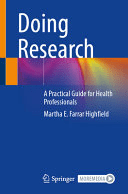
This book provides a step-by-step summary of how to do clinical research. It explains what research is and isn’t, where to begin and end, and the meaning of key terms. A project planning worksheet is included and can be used as readers work their way through the book in developing a research protocol. The purpose of this book is to empower curious clinicians who want data-based answers.
Doing Research is a concise, user-friendly guide to conducting research, rather than a comprehensive research text. The book contains 12 main chapters followed by the protocol worksheet. Chapter 1 offers a dozen tips to get started, Chapter 2 defines research, and Chapters 3-9 focus on planning. Chapters 10-12 then guide readers through challenges of conducting a study, getting answers from the data, and disseminating results. Useful key points, tips, and alerts are strewn throughout the book to advise and encourage readers.
UVA Bjoring Center for Nursing History Forum”Narrating a Life of Care: Hindsight, Omission, and Ambiguities of Interpretation in the History of Religion and Health”
Angela Xia October 24, 2023
12 p.m. (ET) on Zoom
Hosted by the UVA Bjoring Center for Nursing Historical InquiryZoom link: : https://virginia.zoom.us/j/93585126052?pwd=YzBxZ0V3ZGd2ZElvSGpTWWUxZ0V5Zz09 Meeting ID: 935 8512 6052 Passcode: 590924 Doctoral candidate Angela Xia will share findings from her dissertation research on religion, aging, and end of life care in the modern U.S., focusing on the lives of three women of color in the fields of elder and palliative health. In addition to their professional roles as health-care practitioners, what makes these three women — nurse Dr. Rita Kathleen Chow, palliative social worker Dr. Bernice Catherine Harper, and hospice oncologist Dr. Josefina Bautista Magno — distinct are the self-proclaimed connections between their religious identities and their philosophies of care, connections established in self-narrated sources such as memoir, autobiography, interviews, or reminiscences from colleagues and friends. What can such sources tell historians of religion and medicine about the relationship between a care practitioner’s religious subjectivity and their work? What effects do phenomena such as hindsight, omission, recalcitrance, devotion, or revision have on how such relationships are depicted? With such questions in hand, Angela’s talk will explore what it means to narrate a life of care with care.
Angela Xia is a scholar of religion and health in the modern U.S. and a Ph.D. candidate in the Department of Religious Studies at the University of Pennsylvania. Her dissertation, “The Rest of Life: Care and Aging in American Churches, 1970-2000,” offers the first historical account of how American religious leaders, educators, and care providers took up age as a matter of shared concern in the latter half of the 20th century. Her research has been supported by the Barbara Bates Center for the Study of the History of Nursing, the Bjoring Center for Nursing Historical Inquiry, and the Consortium for the History of Science, Technology, and Medicine.
We hope you can join us! Maura Singleton Center Manager Eleanor Crowder Bjoring Center for Nursing Historical Inquiry
Dr. Guian McKee will speak about his new book, Hospital City, Health Care Nation, which recasts the story of the U.S. health care system by emphasizing its economic, social, and medical importance in American communities. Focusing on urban hospitals and academic medical centers, the book argues that the country’s high level of health care spending has allowed such institutions to become vital economic anchors for communities. Yet that spending has also constrained possibilities for comprehensive health care reform over many decades. At the same time, the role of hospitals in urban renewal, in community health provision, and as employers of low-wage workers has contributed directly to racial health disparities. McKee points to the increased role of financial capital after the 1960s in shaping not only hospital growth but also the underlying character of these vital institutions. The book shows how hospitals’ quest for capital has interacted with structural racism and inequality to constrain the U.S. health care system. Dr. McKee is a professor of presidential studies at the UVA Miller Center. He is co-chair of the Presidential Recordings Program and co-directs its Health Care Policy Project. His 2023 book, Hospital City, Health Care Nation, is available through the University of Pennsylvania Press. We hope you can tune in! Maura Singleton Center Manager Eleanor Crowder Bjoring Center for Nursing Historical Inquiry
It is original history that holds lessons for nurses today.What is it that we learn from the women, whose stories are within this book?
I think it’s mainly this: “Do not let your personal limitations stop you from doing the good that you see to do in the world.”
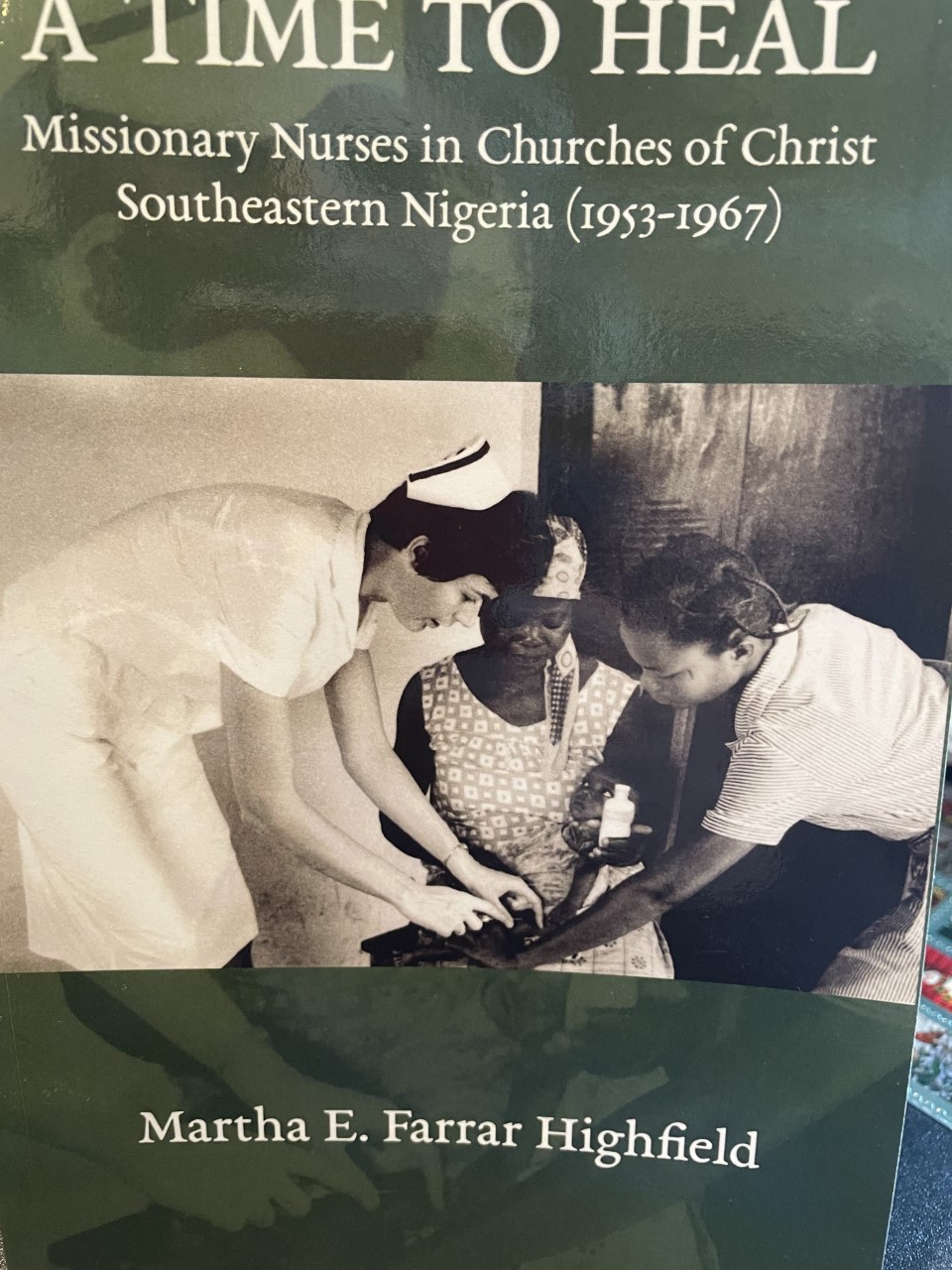
This book contains the previously untold story of how a remarkable set of lay and professional nurses shaped Church of Christ (COC) missions in southeastern Nigeria. No archive of their work existed, and I enjoyed the privilege of compiling the story from the memories, bags, basements, and boxes of the women who lived this story and those who knew them. The book was 10 years in the making.
Missionary student technical nurse learning to give injection (ca 1966). Private collection with permission.
These women’s decisions and actions occurred within a broader shift of COC perspectives away from missionary healthcare as incidental volunteer women’s work, and toward healthcare missions as a Christian duty. For each being a missionary nurse meant delivering healthcare as part of Christian evangelism. To that end they executed multiple roles: healer, educator, revolutionary, advocate, good-will ambassador, protector, administrator, evangelist, role model, fund-raiser, friend, and colleague. We did “everything that needed to be done that there was nobody to do,” reflected missionary Nancy Petty RN.
Enjoy the read, and pursue the good that you can do in this world.
[Featured image: August 23, 1965. The Nigerian Christian Hospital Outpatient Clinic opens. Photographer JR Morgan. Used with permission from JRM private collection]
We need nurse historians–those researchers who can help us understand the present and future by examining the past!
MY PROJECT just published (amazon/apple books/kindle): A Time to Heal: Missionary Nurses in Churches of Christ, Southeastern Nigeria (1953-1967). I like to think of the work as accessible history told from the point of view of those who lived it. A take-away for me from their story is: Don’t let your current inexperience or limited knowledge stop you from doing the good you see to do.
You can be a part of documenting such stories, including your own. Can I pique your interest with these examples about historical research?
1. Artifacts:Example = http://acif.org/The American Collectors of Infant Feeders:
CREDIT http://acif.org/
The American Collectors of Infant Feeders is a non-profit organization whose primary purpose is to gather and publish information pertaining to the feeding of infants throughout history. The collecting of infant feeders and related items is promoted.
2. Interviews:Example = http://www.oralhistory.org/ Want to do interviews of interesting faculty, students, leaders, “ordinary” nurses? Check out the Oral History Association In addition to fostering communication among its members, the OHA encourages standards of excellence in the collection, preservation, dissemination and uses of oral testimony.
3. Stories from the “ordinary:” Example: http://www.murphsplace.com/mother/main.htmlMy Mother’s War – “Helen T.Burrey was an American nurse who served as a Red Cross Nurse during World War I. She documented her experience in both a journal and a scrapbook which has been treasured by her daughter, Mary Murphy. Ms Murphy has placed many of these items on the Internet for people to access and it provides a first-hand account of that experience. Additionally she has a variety of links to other WWI resources.” (quoted from AAHN Resources online)
CREDIT http://e-anca.org/
4. Ethnic studies:Example=https://libguides.rowan.edu/blacknurses Black Nurses in History “This is a ‘bibliography and guide to web resources’ from the UMDNJ and Coriell Research Library. Included are Mamie O. Hail, Mary Eliza Mahoney, Jessie Sleet Scales, Mary Seacole, Mabel Keaton Staupers, Susie King Taylor, Sojourner Truth, Harriet Tubman.” (quoted from AAHN Resources online)
Critical thinking: Don’t forget to save your own materials. Your life is history! What in your life is most interesting? Have you written it down or dictated it into your iphone voice memo? There is GREAT interest in “ordinary” men and women. Many times items are tossed because they are “just letters” or “only old records,” or “stuff.” Just Don’t Do It.