Category Archives: Literature review

?Trustworthy? Protect Your Reputation!

If you are writing something for publication, watch this 2 minute video before selecting a journal!   You’ll thank yourself for doing it.

  1. Thinkthinker
  2. Check
  3. Submit

< 2 minute video that tells you how to think, check, submit:  

  http://thinkchecksubmit.org/

Don’t be fooled.   It’s a lot of work to prepare something to publish, and you want your work to appear in a credible source and be accessible.   It’s YOUR reputation!

If you are a student search for literature, it is important to know this also!!  You want to use the highest quality evidence you can find for your projects.

33,000 foot view isn’t enough! Get down on the Ground To See What’s Really Happening!

My last blog post listed the usual sections of a research report (title, abstract, introduction, methods, results, & discussion/conclusion); and I illustrated the amazing things you can learn from only an article title!Its not enough
This week? Abstracts.   Abstracts are great; abstracts are not enough!

An abstract gives us only enough info to INaccurately apply the study findings to practice.

An abstract typically summarizes all the other sections of the article, such as  the question the researcher wanted to answer, how the researcher collected data to answer it, and what that data showed.  This is great when you are trying to get the general picture, but you should Never assume that the abstract tells you what you need to know.

Wrong WayAbstracts can mislead you IF you do not read the rest of the article.  They are only a short 100-200 words and so they leave out key information.   You may misunderstand study results if you read only the abstract.   An abstract’s 33,000 foot level description of a study, cannot reveal the same things that can be revealed in the up-close & personal description of the full article.

So…what is the takeaway?  Definitely read the abstract to get the general idea.  Then read the full article beginning to end to get the full & beautiful picture of the study.  Davies & Logan (2012) Butterflyencourage us,  Don’t give up reading the full article just because some parts of the study may be hard to understand.  Just read and get what you can, then re-read the difficult-to-understand parts.  Get some help with those PRN.

 

Critical thinking:   What info is missing from the below abstract that you might want to know?

J Nurses Prof Dev. 2016 May-Jun;32(3):130-6. doi: 10.1097/NND.0000000000000227.    Partnering to Promote Evidence-Based Practice in a Community Hospital: Implications for Nursing Professional Development Specialists. Highfield ME1, Collier A, Collins M, Crowley M.

ABSTRACT: Nursing professional development specialists working in community hospitals face significant barriers to evidence-based practice that academic medical centers do not. This article describes 7 years of a multifaceted, service academic partnership in a large, urban, community hospital. The partnership has strengthened the nursing professional development role in promoting evidence-based practice across the scope of practice and serves as a model for others.

More info on abstracts & other components of research articles?  Check out Davies & Logan (2012) Reading Research published by Elsevier.

“Please answer!” – How to increase the odds in your favor when it comes to questionnaires

Self-report by participants is one of the most common ways that researchers collect data, yet it is fraught with problems.   Some worries for researchers are: “Will participants be honest or will they say what they think I want to hear?”   “Will they understand the DifferentGroupsquestions correctly?”  “Will those who respond (as opposed to those who don’t respond) have unique ways of thinking so that my respondents do not represent everyone well?” and a BIG worry “Will they even fill out and return the questionnaire?”
One way to solve at least the latter 2 problems is to increase the response rate, and Edwards et al (2009 July 8) reviewed randomized trials  to learn how to do just that!!Questionnaire faces

If you want to improve your questionnaire response rates, check it out!  Here is Edwards et al.’s plain language summary as published in Cochrane Database of Systematic Reviews, where you can read the entire report.

Methods to increase response to postal and electronic questionnaires

MailPostal and electronic questionnaires are a relatively inexpensive way to collect information from people for research purposes. If people do not reply (so called ‘non-responders’), the research results will tend to be less accurate. This systematic review found several ways to increase response. People can be contacted before they are sent a postal questionnaire. Postal questionnaires can be sent by first class post or recorded delivery, and a stamped-return envelope can be provided. Questionnaires, letters and e-mails can be made more personal, and preferably kept short. Incentives can be offered, for example, a small amount of money with Remember jpga postal questionnaire. One or more reminders can be sent with a copy of the questionnaire to people who do not reply.

 

Critical/reflective thinking:  Imagine that you were asked to participate in a survey.  Which of these strategies do you think would motivate or remind you to respond and why?

For more info read the full report: Methods to increase response to postal and electronic questionnaires


It was the best of evidence; it was the worst of evidence.

evidencebased practiceEvidence-based practice = best available evidence + expert clinical judgment + patient & family values/preferences.

When clinicians diagnose & treat based on outdated or inadequate knowledge, then outcomes are at best uncertain.  The internet itself is a poor information source; & colleagues may be no more up-to-date that you.

Good sources are the world-wide Cochrane Collaboration and the specific evidence-based Homepractice journals that are beginning to grow–these take best information from the research report all the way through clinical recommendations.   For research reports per se, PubMed is a comprehensive, U.S. tax-supported Findingsdatabase; & there when you find information that fits using your key search terms, you can also look for related articles & get full-text through interlibrary loan or online.  Another strategy is take the article that fits your clinical issue to your librarian, and ask for help in finding more research on the identical clinical issue.
While no one can read everything in the literature, everyone can read something. You can do a focused review on any particular problem.

Critical thinking:  Is there a clinical issue that you think could use a better solution?  Plug related words into PubMed & see what you can learn.question

For more information see fulltext at: http://www.ncbi.nlm.nih.gov/pmc/articles/PMC226388/

ZIKA: Evidence-based clinical guidelines to prevent sexual transmission

As  you probably know Zika is already causing problems in an area outside of Miami, FL. CDC has taken the unusual step of issuing a travel warning there. 16743-close-up-of-a-mosquito-feeding-on-blood-pv

Accurate clinician and patient information in the U.S. will become more critical, and your advice to others could save lives as the disease spreads.

imagesCALQ0QK9Some of the best evidence on what to teach is from CDC.  These experts have reviewed the best available literature and developed these clear  evidence-based clinical guidelines to
prevent sexual transmission of Zika
.  Such evidence-based guidelines are considered very STRONG evidence--some of the strongest out there!! (For more see: “I like my “I like my coffee (and my evidence) strong!”)

Note that I point out, as do they, that these guidelines are based on the best available evidence which continues to evolve.  (It wasn’t that long ago when experts denied that Zika could be sexually transmitted.  Now we know better.)

what so what what nextScientific evidence is not static. It is dynamic and ever evolving.  This is not a problem with science, but is part of its very nature–that of discovery.

Why this matters: Clinicians should continue to educate all patients about ZIKV sexual transmission risk, to conduct testing for all persons with possible sexual exposure, and to report all cases of ZIKV to local health authorities” (CDC, 2016).

Critical thinking: How might you use this information at work or with the broader public?question

For more information: Check out CDC Zika Virus webpage 


Google’s Beauty is Only Skin Deep: Go for the Database!

maxresdefaultGoogle–not to mention yahoo, bing & other web search engines–are mere popularity contests of literature.   Google Scholar is a step up, but it is still a search engine.  It can miss important articles entirely.

If you want to be sure that you are getting the BEST, you gotta look in the right place if you want to find the right articles on the right topic at the right time!Beauty contest winner

You need a Database!

Don’t believe me?  Watch “What are databases and why you need them?”(youtube 2:34)

Reputable publishers give away very few articles for free, so when you want the best literature out there you need a Database that will systematically help you to find quality articles that fit your topic.

PubMed.gov is a tax funded database that is highly comprehensive.  CINAHL is strong on nursing literature.  If you are enrolled in a university, you have access to lots of full-text articles at no added cost.  Check with your librarian if your database search is not turning up what you need–with a few hints, you could get the best.

Needle in haystackFor more info:  Look for that needle in the haystack.

“So much to read! So little time!” Literature Review How-To.

.


So much to read!!   So little time!!swirly clock.jpg

Here are some hints on how to get and put together literature on a problem that is “bugging” you!

  1. KEYUse key words to search PubMed or CINAHL especially.
  2. Select article titles or abstracts that have been published in the last 3-5 years and seem most on target with your topic. (Don’t be distracted by interesting, but irrelevant articles. Also, sometimes there are ‘classic’ articles published earlier, and you may need to get some advice on whether something is classic.)TOPIC candybar
  3. Get copies of the articles most relevant to your topic
  4. Divide the articles into two stacks:
    • Research studies – You can often identify these because they will say they are research or you will find sections in the articles with some of these titles: Introduction/Background, Methods/Procedures, Results/Findings, Discussion, Implications, and Conclusion
    • NON-research articles – These may cite a lot of other authors in describing an issue
  5. Read the NON-research articles first. Determine whether the articles are citing experts or the author is just giving you their own opinion.  Of course the ones citing experts are stronger.idea lightbulb
  6. Highlight or underline the key ideas or issues that are raised in those articles. Pay attention to where the authors Agree or Disagree.
  7. Now read the research articles and highlight key ideas & issues.
  8. Place articles in order from stronger to weaker research:
    • Stronger research articles are randomized controlled trials and meta-analyses
    • Next strongest are experiments without randomization or a control group (sometimes called quasi-experimental or sometimes pre/posttest surveys)
    • Next strongest are studies that show association or correlation between two variables.
    • And finally last are those studies that just describe something. The authors didn’t do any intervention and they are not trying to relate one variable to another.   These are called descriptive studies and the description may be a list of themes or it may be in numbers.  Meta-synthesis articles fall into this category.SanDiegoCityCollegeLearningResource_-_bookshelf
  9. You can create a table of evidence that can help you to sort out key ideas and strength of research studies.  (A sample is at http://guides.lib.unc.edu/ebpt-home/ebpt-pointers-evidence
  10. If you are writing a summary of literature, you should now be able to have a paragraph on each of the main ideas raised in the literature and to cite the sources of those ideas. If various authors disagree, be sure to present both sides of the issue.

QUESTIONCritical thinking: What is something in nursing that has been “bugging” you.  Missed care–e.g., inability to get all the tasks done on time?  Or discharge med teaching?  Or the
difficult colleague?   Go to PubMed and find a research and a non-research article.  Pick out the key ideas in each.  What did you learn?

For more information check out:  Finding the needles in the haystacks: Evidence hunting efficiently & effectively.


“Oh Baby!” Evidence-based Naming Prevents Events

EBP Preventive Action:  Evidence-based, distinct infant naming can avoid sentinel events related to misidentification of newborns (TJC, 2015).

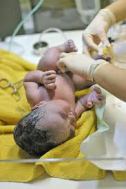
Problem:  Misidentification errors of NICU babies are common newborn3(Gray et al., 2006).   About 12% of the 4 million born in U.S. hospitals were admitted to NICU’s.  At birth every infant requires quick application of an armband, and when parents have not yet decided on a name the assigned name is often quite nondistinct (e.g., BabySmith).

Evidence:
A pretest/posttest of a new, more infant-specific naming system was “conducted in order to examine the effect of a distinct naming convention that incorporates the mother’s first name into the newborn’s first name (e.g., Wendysgirl) on the incidence of wrong-patient errors. We used the Retract-and-Reorder (RAR) tool, an established, automated tool for detecting the outcome of wrong-patient electronic orders. The RAR tool identifies orders placed on a patient that are retracted within 10 minutes and then placed by the same clinician on a different patient within the next 10 minutes” (Adelman et al., 2013). newborn2Their results? RAR events were reduced by 36.3%.   Their recommendations? Switch to a distinct naming system.


Using something like Judysgirl Smith is infant specific. “In the case of multiple births, the hospital adds a number in front of the mother’s first name (ex: 1Judysgirl and 2Judysgirl)” (TJC).

TJC recommends:

  • “Stop using Babyboy or Babygirl as part of the temporary name.
  • Change to a more distinct naming convention.
  • Train staff on the distinct naming convention.
  • Follow the recommendation in National Patient Safety Goal 01.01.01 and implement use of two patient identifiers at all times.
  • As soon as parents decide on their baby’s name, enter that name into the medical record instead of the temporary name.”

Commentary: While this is just one study, RNs should evaluate whether it is riskier to continue any current practice of non-distinct naming or to switch practices to distinct naming. No risks were identified to the distinct naming system & it likely requires only the resource investment of educating staff.  Adelman et al.’s (2013) study is current, moderately strong, quasi-experimental evidence that showed a significant decrease in errors that could have sentinel event outcomes. Any who make the switch should monitor outcomes. All who don’t make the switch should, too!

Critical Thinking: Examine the risks, resources, & readiness of staff in your facility to make the switch to a distinct NICU infant naming system?  question Should the naming system be extended to all infants?

Want more information?  See

“When Science Meets Sacred Cows”

Sometimes the scientific evidence is clear….but no one wants to change what they are doing.

Change is hard if providers, media, or members of the public are in love with keeping things the way they are, or have a vested interest in the status quo, or perhaps just don’t like change…or the evidence.  (Maybe we’re all a little guilty of this.)cow nosw

Check out this free, full-text editorial available through PubMed: http://www.o-wm.com/content/when-science-meets-sacred-cows  (Source: 2010 OWM).

Critical Thinking: What sacred cows should be put out to pasture in your or others’ practice?  What about using the Trendeleberg position to treat hypotension, checking foley balloons before insertion, other?  List a few areas where your organization HAS changed practice based on evidence.  What were the barriers & facilitators?

METHODS in the Research Madness

[This is a re-post from 2014.  If you weren’t a reader then….read on…..]

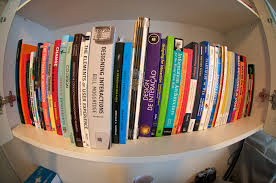
fisheye booksResearch article sections are: Title, Abstract, Introduction/background,Methods, Results, Discussion, & Implications/Conclusions

METHODS =  Design, Sample, Setting, & Data collection instrument

Sometimes these above elements of METHODS are subheadings.

Sometimes not.

  • Key point #1: Design= overall plan for answering the question or proving the hypothesis.  KEYThe 2 basic types of design are 1) experimental & 2) non-experimental.   In experimental, the researcher does something to the subjects and measures the effects of that something.  In non-experimental, the research merely observes and describes what is happening without doing anything to change it.

  •  KEYKey point #2: Setting=where the study is conducted: home, hospital, office, classroom, on KEYan ocean cruise, or other.
  • Key point #3: Sample includes who/what subjects were in & excluded from the study; how many subjects were in the study; & whether subjects were selected using random methods or non-random methods.   In random selection every eligible subject has the same chance of being selected. That’s called probability sampling.  An example is drawing names from a hat.  In non-random selection only the most nearby subjects are asked to be in the study. That’s called non-probability or convenience sampling.  An example, using a clipboard to survey people who walk into a mall one day. [Note: Subjects can be people, animals, charts, hospitals, or nations.]

(Whew!….Enough for now.)

Critical Thinking Exercise:  Find the Design, Setting, & Sample in this excerpt of Methods from Mohammedkarimi et al, (2014): question

“A double-blind, randomized clinical trial (RCT) was performed among 90 adult patients with acute headache in Shahid Rahnemoon Emergency Center of Yazd city of Iran (45 patients in lidocaine group and 45 patients in placebo group). Patients with history of epilepsy, allergy to lidocaine, signs of skull base fracture, Glasgow Coma Scale (GCS) < 15, patients younger than 14 years and patients who had received any medication in previous 2 h were excluded.”

Making research accessible to RNs