
So you want to do a research study? Wonderful!
Here are 5 bits of advice to get started:
- If you haven’t done a scientific research study before or don’t have a PhD, then realize that your project will go much more smoothly if you consult with a PhD or someone with experience.
You bring the great clinical ideas, & the experienced researcher will bring research design expertise. The design is the overall research plan for getting and analyzing the data to answer your question or to find out how well your new ideas work. That person  will know the technical things you need to plan into your study in order to make the study ‘sparkle’ and to get approval from human subjects review committees. The person doesn’t have to be an expert on your topic. You fill that role, or soon will!
- If you have access to a librarian who is good at helping you look for current literature, s/he is one of your Best friends in getting a project done.
Searching for on-target literature from the millions of publications out there takes some special skills. Of course you can learn these on your own, but how much nicer to talk with a librarian about the key ideas in your project and allow them to use their special skills to help you. As an experience researcher, I can tell you that good  librarians are worth their weight in gold! Librarians can help you find what others have learned about your topic already, and then you can build on that knowledge. [note: check out Finding the Needles in the Haystacks: Evidence Hunting Efficiently & Effectively for more]
- Because it’s your first foray into research, you might want to stick with a descriptive study.
What does that mean? It means that you will collect data about what the current situation is. For example, you might measure the average days to return of bowels sounds on your unit, OR the number of minutes it takes to do some task, OR the interruptions of patient sleep during the night. 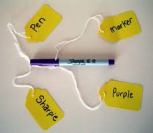 This will help you to establish whether or not there really is a problem to be solved. Descriptive studies are much simpler to conduct and analyze than experimental studies in which you measure something, make an improvement, and then see if the improvement improved things. For example, you would measure sleep interruptions, institute a quiet time, and then measure sleep interruptions again to see if there were fewer. [check out “What it is.” – a primer on descriptive studies for more]
- Pick a topic you are really jazzed about!
 Every researcher from time to time can feel ‘bogged down’ or bored with what they are doing, & one of the best protections against that is making sure you think the topic is super-interesting in the first place. If you get a little bored or stuck later don’t be surprised; it just means you’re pretty normal. Those stuck times might even feel like “hitting the wall” in a long race, and once you get past it things get better. Remind yourself why you loved the topic in the first place. Talk to your PhD friend or a mentor for encouragement. Take a little break. Read something really interesting about your topic.
- Have fun!
While not every step of the research study process will make you want to jump up, sing, and dance, the process as a whole is really rewarding and great fun. You will be empowered by new learning—not just about your topic, but about how to do research!
Critical thinking: What’s a topic of interest to YOU? Write a descriptive question that you could answer with research. (Check out You Got A Problem With That? Try PICO*for more help.)







 KEY POINTS:
 no, the response tells us only how the patient remembers it.
 see
see  (
(
 measures

 You don’t merely ask them how much they weigh
  en directly measure how many patients started using it after you started your intervention and their pain scores.

 workplace compassion influence patient perceptions?


 FOR MORE INFORMATION: Check our Nurse Author & Editor for sure! http://naepub.com/

 Is pain experience as diverse as our populations? This week I came across an interesting meta-analysis.
 (RCTs) or experimental studies is the strongest type of MA. MA based on descriptive or non-experimental studies is a little less strong, because it just describes things as they seem to be; & it cannot show that one thing causes another.
 your practice? Or should it? How can you use the findings with your patients? Should each patient be treated as a completely unique individual? Or what are the pros & cons of using this MA to give us a starting point with groups of patients? [To dialogue about this, comment below.]
 library using reference above. It is available electronically pre-publication. Also check out my