Research articles have relatively standardized sections:
• Title
• Abstract (overview of project that is somewhat incomplete)
• Introduction (purpose, problem, & background)
• Methods (sample, setting, measurements collected)
• Results (data analysis from measurements), &
• Discussion/conclusions (what the data analysis tells us about the original purpose & problem)
These may vary a little from article to article.
Let’s look at the TITLE for a minute. A good title is a mini-abstract. A good title will include:
• Key variables (remember a variable is something that varies, such as fatigue or satisfaction)
• Population studied
• Setting of study
• Design of study
For example take this research article title “What patients with abdominal pain expect about pain relief in the Emergency Department” by Yee et al in 2006 in JEN.
• Key thing that varies? Expectations about pain relief
• Population studied? ED patients with abdominal pain
• Setting? May be the ED
• Design? (not included, but those with experience in reading research would guess that it is probably a descriptive study—in other words it just describes the patients’ expectations without any intervention.)
Self-report by participants is one of the most common ways that researchers collect data, yet it is fraught with problems. Some worries for researchers are: “Will participants be honest or will they say what they think I want to hear?” “Will they understand the questions correctly?” “Will those who respond (as opposed to those who don’t respond) have unique ways of thinking so that my respondents do not represent everyone well?” and a BIG worry “Will they even fill out and return the questionnaire?”
One way to solve at least the latter 2 problems is to increase the response rate, and Edwards et al (2009 July 8) reviewed randomized trials to learn how to do just that!!
If you want to improve your questionnaire response rates, check it out! Here is Edwards et al.’s plain language summary as published in Cochrane Database of Systematic Reviews,where you can read the entire report.
Postal and electronic questionnaires are a relatively inexpensive way to collect information from people for research purposes. If people do not reply (so called ‘non-responders’), the research results will tend to be less accurate. This systematic review found several ways to increase response. People can be contacted before they are sent a postal questionnaire. Postal questionnaires can be sent by first class post or recorded delivery, and a stamped-return envelope can be provided. Questionnaires, letters and e-mails can be made more personal, and preferably kept short. Incentives can be offered, for example, a small amount of money with a postal questionnaire. One or more reminders can be sent with a copy of the questionnaire to people who do not reply.
Critical/reflective thinking: Imagine that you were asked to participate in a survey. Which of these strategies do you think would motivate or remind you to respond and why?
There are several ways to classify types of research. One way is qualitative versus quantitative–in other words, WORD vs. NUMBER data, methods, & analysis.
Qualitative research focuses on words (or sometimes images) and their meanings.
Quantitative research focuses on numbers or counting things and statistical analysis that yields probable meaning.
If you watch this short, easy-to-understand youtube clip, you’ll have all the basics that you need to understand these! Enjoy!
In honor of Nurse Week, I offer this tribute to the avant garde research work of Florence Nightingale in the Crimea that saved lives and set a precedent worth following.
Nightingale was a “passionate statistician” knowing that outcome data are convincing when one wants to change the world. She did not merely collect the data, but also documented it in a way that revealed its critical meaning for care.
As noted by John H. Lienhard (1998-2002): “Once you see Nightingale’s graph, the terrible picture is clear. The Russians were a minor enemy. The real enemies were cholera, typhus, and dysentery. Once the military looked at that eloquent graph, the modern army hospital system was inevitable. You and I are shown graphs every day. Some are honest; many are misleading….So you and I could use a Florence Nightingale today, as we drown in more undifferentiated data than anyone could’ve imagined during the Crimean War.” (Source: Leinhard, 1998-2002)
As McDonald (2001) writes in the BMJ free, full-text, Nightingale was “a systemic thinker and a “passionate statistician.” She insisted on improving care by making policy & care decisions based on “the best available government statistics and expertise, and the collection of new material where the existing stock was inadequate.”(p.68)
Moreover, her display of the data brought its message home through visual clarity!
Thus while Nightingale adhered to some well-accepted, but mistaken, scientific theories of the time (e.g., miasma) her work was superb and scientific in the best sense of the word. We could all learn from Florence.
CRITICAL THINKING: What issue in your own practice could be solved by more data? How could you collect that data? If you have data already, how can you display it so that it it meaningful to others and “brings the point home”?
Researchers collect two types of data in their studies
Numbers (called quantitative data)
Words & narratives (called qualitative data)
One source of rich word or narrative (qualitative) data for answering nursing questions is nurses’ stories. Dr. Pat Benner RN, author of Novice to Expert explains two things we can do to help nurses fully tell their stories so we can learn the most from their practice.
Listen well without interrupting
Help nurses ‘unpack’ their stories
Check out this excellent 2:59 video of Dr. Benner’s and revolutionize how you learn about nursing from nursing stories: Preview: The use of Narratives
Critical thinking: For a study using narratives in research see Leboul et al. (2017). Palliative sedation challenging the professional competency of health care providers and staff: A qualitative focus group and personal written narrative study. [full text available thru PubMed at https://www.ncbi.nlm.nih.gov/pubmed/28399846]. 1) Do you think the authors listened and unpacked information from the focus groups & written narratives; 2) Do you think there might be a difference in the way people write narratives and verbally tell narratives? 3) How might that difference if any affect the research findings?
Quasi-experiments are a lot of work, yet don’t have the same scientific powerto show cause and effect, as do randomized controlled trials (RCTs).An RCT would provide better support for any hypothesis that X causes Y. [As a quick review of what quasi-experimental versus RCT studies are, see “Of Mice & Cheese” and/or “Out of Control (Groups).”]
So why do quasi-experimental studies at all? Why not always do RCTs when we are testing cause and effect? Here are 3 reasons:
#1 Sometimes ETHICALLY the researcher canNOT randomly assign subjects to a control and an experimental group. If the researcher wants to compare health outcomes of smokers with non-smokers, the researcher cannot assign some people to smoke and others not to smoke! Why? Because we already know that smoking has significant harmful effects. (Of course, in a dictatorship, by using the police a researcher could assign them to smoke or not smoke, but I don’t think we wanna go there.)
#2 Sometimes PHYSICALLY the researcher canNOT randomly assign subjects to control & experimental groups. If the researcher wants to compare health outcomes of
individuals from different countries, it is physically impossible to assign country of origin.
#3 Sometimes FINANCIALLY the researcher canNOT afford to assign subjects randomly to control & experimental groups. It costs $ & time to get a list of subjects and then assign them to control & experimental groups using random numbers table or drawing names from a hat.
Thus, researchers sometimes are left with little alternative, but to do a quasi-experiment as the next best thing to an RCT, then discuss its limitations in research reports.
Critical Thinking: You read a research study in which a researcher recruits the 1st 100 patients on a surgical ward January-March quarter as a control group. Then the researcher recruits the 2nd 100 patients on that same surgical ward April-June for the experimental group. With the experimental group, the staff uses a new, standardized pain script for better pain communications. Then the pain communication outcomes of each group are compared statistically.
Is this a quasi-experiment or a randomized controlled trial (RCT)?
What factors (variables) might be the same among control & experimental groups in this study?
What factors (variables) might be different between control & experimental groups that might affect study outcomes?
How could you design an ethical & possible RCT that would overcome the problems with this study?
Why might you choose to do the study the same way that this researcher did?
In the last “Quasi-wha??” blogpost, I described 1 type of experimental design: Quasi-experimental. To review… In quasi-experimental designs, the researcher manipulates some variable, but either 1) doesn’t randomly assign subjects to a control and experimental group OR 2) doesn’t have a control group at all.
For example, the researcher may introduce pet therapy on unit #1 and avoid pet therapy on unit #2 and then afterwards compare the anxiety levels of patients on the 2 units. That study has a control group (unit #2), but because patients weren’t (& probably couldn’t be) randomly assigned to the units, this would be a quasi-experimental study. The control group in this pet therapy case is what researchers call a “non-equivalent control group.” Non-equivalent means the groups are different in ways that might affect study results! [Note: For review of what constitutes a true experimental study see first part of “Quasi-wha??” blogpost.]
Herein lies a weak link in the cause-and-effect chain. Quasi- designs are NOT as strong as true experimental designs because something other than our treatment (in this case pet therapy) may have created any difference in outcomes (e.g., anxiety levels). Why? Here’s your answer.
Unit #1
In an experimental study, randomly assigning subjects to a
Unit #2
control and a separate experimental group means that all the little, variable weirdities of all subjects are equally distributed to each group. Each group is the same mix of different types of people. This means we can assume that both groups are the exact same type of
people in regard to things that may influence study outcomes, such as attitudes, values, preferences, beliefs, anxiety level, psychology, physiology and so on.
Unit #1=Apples. Unit #2=Oranges
In contrast, in the quasi-experimental pet therapy example above, there is probably something that caused a certain type of person to be on unit #1 and a different type to be on unit #2. Maybe it was their diagnosis, their doctor, their type of surgery, or other. Thus, we cannot assume that people in unit #1 and unit #2 groups are the same before pet therapy, and so any differences between them after pet therapy might have already existed.
So why do quasi-experimental studies at all?? There are great reasons! Stay tuned for next blogpost.
What makes this a quasi-experimental design? [Hint: Does it have a control group? Were subjects randomly assigned to groups? Are both randomization & control group missing?]
What might have caused the change in behavior, instead of the tweets?
What contribution do you think the study makes to improving practice?
For more information on studies with non-randomized control groups see “Of Mice & Cheese” or comment below. Let’s talk!
the participants are randomly assigned to groups, &
one group is a control group that gets a placebo or some inert treatment so that outcomes in that group can be compared to the group(s) that did get the treatment.
Non-experimental design in which the researcher doesn’t manipulate anything, but just observes & records what is going on. Some of these are descriptive, correlational, case, or cohort study designs for example.
One particularly interesting “experimental” design is one in which 1 or 2 of the experimental design ideal requirements as listed above are missing. These are called quasi-experimental designs.
In a quasi experimental design
The researcher manipulates some variable, but….
Either the participants are NOT randomly assigned to groups
&/OR there is no control group.
A quasi-experimental design is not as strong as a true experiment in showing that the manipulated variable X causes changes in the outcome variable Y. For example, a true experimental study with manipulation, randomization, and a control group would create much stronger evidence that hospital therapy dogs really reduced patient pain and anxiety. We would not be as confident in the results of a quasi-experimental design examining the exact same thing. In the next blog, we’ll examine why.
Critical thinking: Go to PubMed & use search terms “experiment AND nurse” (without the quotation marks). Open an interesting abstract and look for the 3 elements of a classic experimental design. Now look for “quasi experiment AND nurse” (without the quotation marks.) See what element is missing!
Today, I stumbled onto Study Design 101 at https://himmelfarb.gwu.edu/tutorials/studydesign101/index.html
If you’re a research afficianado, then you probably already know that some types of research studies are considered stronger than others. Stronger ones are those that support a hypothesis that X really did cause a change in Y. [For example, study results that suggest that a pain script (X) really does improve patient satisfaction with pain management (Y)]
You may even know that meta-analyses of randomized controlled trials are the strongest type of research evidence and that case studies are considered the weakest. (Expert opinion that is not research at all is even below that.)
But….are you clear on what a meta-analysis, a case study, a cohort study or a randomized controlled trial is? If not or if you want a review, Study Design 101 is for YOU! Check it out. Short descriptions followed by 2 question quizzes for self-testing will keep you on track. Enjoy.
If you haven’t done a scientific research study before or don’t have a PhD, then realize that your project will go much more smoothly if you consult with a PhD or someone with experience.
You bring the great clinical ideas, & the experienced researcher will bring research design expertise. The design is the overall research plan for getting and analyzing the data to answer your question or to find out how well your new ideas work. That person will know the technical things you need to plan into your study in order to make the study ‘sparkle’ and to get approval from human subjects review committees. The person doesn’t have to be an expert on your topic. You fill that role, or soon will!
If you have access to a librarian who is good at helping you look for current literature, s/he is one of your Best friends in getting a project done.
Searching for on-target literature from the millions of publications out there takes some special skills. Of course you can learn these on your own, but how much nicer to talk with a librarian about the key ideas in your project and allow them to use their special skills to help you. As an experience researcher, I can tell you that good librarians are worth their weight in gold! Librarians can help you find what others have learned about your topic already, and then you can build on that knowledge. [note: check out Finding the Needles in the Haystacks: Evidence Hunting Efficiently & Effectively for more]
Because it’s your first foray into research, you might want to stick with a descriptive study.
What does that mean? It means that you will collect data about what the current situation is. For example, you might measure the average days to return of bowels sounds on your unit, OR the number of minutes it takes to do some task, OR the interruptions of patient sleep during the night. This will help you to establish whether or not there really is a problem to be solved. Descriptive studies are much simpler to conduct and analyze than experimental studies in which you measure something, make an improvement, and then see if the improvement improved things. For example, you would measure sleep interruptions, institute a quiet time, and then measure sleep interruptions again to see if there were fewer. [check out “What it is.” – a primer on descriptive studies for more]
Pick a topic you are really jazzed about!
Every researcher from time to time can feel ‘bogged down’ or bored with what they are doing, & one of the best protections against that is making sure you think the topic is super-interesting in the first place. If you get a little bored or stuck later don’t be surprised; it just means you’re pretty normal. Those stuck times might even feel like “hitting the wall” in a long race, and once you get past it things get better. Remind yourself why you loved the topic in the first place. Talk to your PhD friend or a mentor for encouragement. Take a little break. Read something really interesting about your topic.
Have fun!
While not every step of the research study process will make you want to jump up, sing, and dance, the process as a whole is really rewarding and great fun. You will be empowered by new learning—not just about your topic, but about how to do research!
Critical thinking: What’s a topic of interest to YOU? Write a descriptive question that you could answer with research. (Check out You Got A Problem With That? Try PICO*for more help.)


 questions correctly?” “Will those who respond (as opposed to those who don’t respond) have unique ways of thinking so that my respondents do not represent everyone well?” and a BIG worry “Will they even fill out and return the questionnaire?”
 Postal and electronic questionnaires are a relatively inexpensive way to collect information from people for research purposes. If people do not reply (so called ‘non-responders’), the research results will tend to be less accurate. This systematic review found several ways to increase response. People can be contacted before they are sent a postal questionnaire. Postal questionnaires can be sent by first class post or recorded delivery, and a stamped-return envelope can be provided. Questionnaires, letters and e-mails can be made more personal, and preferably kept short. Incentives can be offered, for example, a small amount of money with
  a postal questionnaire. One or more reminders can be sent with a copy of the questionnaire to people who do not reply.

 “Once you see Nightingale’s graph, the terrible picture is clear. The Russians were a minor enemy. The real enemies were cholera, typhus, and dysentery. Once the military looked at that eloquent graph, the modern army hospital system was inevitable. You and I are shown graphs every day. Some are honest; many are misleading….So you and I could use a Florence Nightingale today, as we drown in more undifferentiated data than anyone could’ve imagined during the Crimean War.” (Source: Leinhard, 1998-2002)


 One source of rich word or narrative (qualitative) data for answering nursing questions is nurses’ stories. Dr. Pat Benner RN, author of Novice to Expert explains two things we can do to help nurses fully tell their stories so we can learn the most from their practice.
 Quasi-experiments are a lot of work, yet don’t have the same scientific power to show cause and effect, as do randomized controlled trials (RCTs). An RCT would provide better support for any hypothesis that X causes Y. [As a quick review of what quasi-experimental versus RCT studies are, see
  and an experimental group. If the researcher wants to compare health outcomes of smokers with non-smokers, the researcher cannot assign some people to smoke and others not to smoke! Why? Because we already know that smoking has significant harmful effects. (Of course, in a dictatorship, by using the police a researcher could assign them to smoke or not smoke, but I don’t think we wanna go there.)
 experimental groups. If the researcher wants to compare health outcomes of
 to control & experimental groups. It costs $ & time to get a list of subjects and then assign them to control & experimental groups using random numbers table or drawing names from a hat.
![welcome[1]](https://discoveringyourinnerscientist.com/wp-content/uploads/2017/03/welcome1.gif?w=163&h=119)
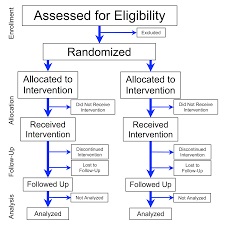
 Herein lies a weak link in the cause-and-effect chain. Quasi- designs are NOT as strong as true experimental designs because something other than our treatment (in this case pet therapy) may have created any difference in outcomes (e.g., anxiety levels). Why? Here’s your answer.


 In a quasi experimental design


 I love sharing a great resource, don’t you?
 You may even know that meta-analyses of randomized controlled trials are the strongest type of research evidence and that case studies are considered the weakest. (Expert opinion that is not research at all is even below that.)
 controlled trial is? If not or if you want a review,
 will know the technical things you need to plan into your study in order to make the study ‘sparkle’ and to get approval from human subjects review committees. The person doesn’t have to be an expert on your topic. You fill that role, or soon will!
 librarians are worth their weight in gold! Librarians can help you find what others have learned about your topic already, and then you can build on that knowledge. [note: check out
  This will help you to establish whether or not there really is a problem to be solved. Descriptive studies are much simpler to conduct and analyze than experimental studies in which you measure something, make an improvement, and then see if the improvement improved things. For example, you would measure sleep interruptions, institute a quiet time, and then measure sleep interruptions again to see if there were fewer. [check out
  Every researcher from time to time can feel ‘bogged down’ or bored with what they are doing, & one of the best protections against that is making sure you think the topic is super-interesting in the first place. If you get a little bored or stuck later don’t be surprised; it just means you’re pretty normal. Those stuck times might even feel like “hitting the wall” in a long race, and once you get past it things get better. Remind yourself why you loved the topic in the first place. Talk to your PhD friend or a mentor for encouragement. Take a little break. Read something really interesting about your topic.