Below is my adaptation of one of the clearest representations that I have ever seen of when the roads diverge into quality improvement, evidence-based practice, & research. Well done, Dr. E.Schenk PhD MHI, RN-BC!
Below is my adaptation of one of the clearest representations that I have ever seen of when the roads diverge into quality improvement, evidence-based practice, & research. Well done, Dr. E.Schenk PhD MHI, RN-BC!
Key point! The data collection section of a research article includes: who collects what data when, where & how.
In previous blogs we’ve looked at title, introduction, and other elements of methods section (design, sample, & setting). In this one let’s take a look at data collection.
Data are a collection of measurements. For example, student scores on a classroom test might be 97, 90, 88, 85, & so on. Each single score is a datum; collectively they are data.
What data are collected is answered in this section. The data (or measurements) can be  numbers OR words. For example, numbers data might include patient ratings of their pain on a 0-10 scale. An example of word data would asking participants to describe something in words without counting the words or anything else. For example, word data might include patient descriptions pain in words, like
  “stabbing,” “achy,” and so on. Sometimes a researcher collects both number and word data in the same study to give a more complete description. You can see how knowing the patient’s pain rating and hearing a description would give you a much clearer picture of pain.
How the data are collected includes what instrument or tool was used to gather data (e.g., observation, biophysical measure, or self-report) and how consistently & accurately that tool measures what it is supposed to measure (e.g., reliability & validity). Also included is who collected the data and the procedures that they followed—how did they obtain consent, interaction with subjects, timing of data collection and so on.
Now you know!
Critical thinking question: Did these authors use qualitative or quantitative data collection methods? Coelho, A., Parola, V., Escobar-Bravo, M., & Apostolo, J. (2016). Comfort experience in palliative care, BMD Palliative care, 15(71). doi: 10.1186/s12904-016-0145-0. Explain your answer.
 Evidence-based practice = best available evidence + expert clinical judgment + patient & family values/preferences.
When clinicians diagnose & treat based on outdated or inadequate knowledge, then outcomes are at best uncertain. The internet itself is a poor information source; & colleagues may be no more up-to-date that you.
Good sources are the world-wide Cochrane Collaboration and the specific evidence-based  practice journals that are beginning to grow–these take best information from the research report all the way through clinical recommendations. For research reports per se, PubMed is a comprehensive, U.S. tax-supported
  database; & there when you find information that fits using your key search terms, you can also look for related articles & get full-text through interlibrary loan or online. Another strategy is take the article that fits your clinical issue to your librarian, and ask for help in finding more research on the identical clinical issue.
While no one can read everything in the literature, everyone can read something. You can do a focused review on any particular problem.
Critical thinking: Is there a clinical issue that you think could use a better solution? Plug related words into PubMed & see what you can learn.
For more information see fulltext at: http://www.ncbi.nlm.nih.gov/pmc/articles/PMC226388/
 Ok, so you found some GREAT, new & improved clinical guidelines that exactly fit the problem that you are trying to solve on your unit. Now What??? How do you get from the guidelines from paper to practice? & How do you know that the guidelines are any good any way? Where are the tools for all this?
Like the old cartoon Mighty Mouse, here comes the Registered Nurses Association of Ontario to save the day! (cue the music) You can download a FREE toolkit. Yes, that’s right. FREE.
It comes complete with examples & step-by-step instructions. Check it out! And if I haven’t been persuasive enough, here’s the table of contents! This is waaay cooool. Don’t miss it.
For more info here’s the site to download: http://rnao.ca/bpg/resources/toolkit-implementation-best-practice-guidelines-second-edition

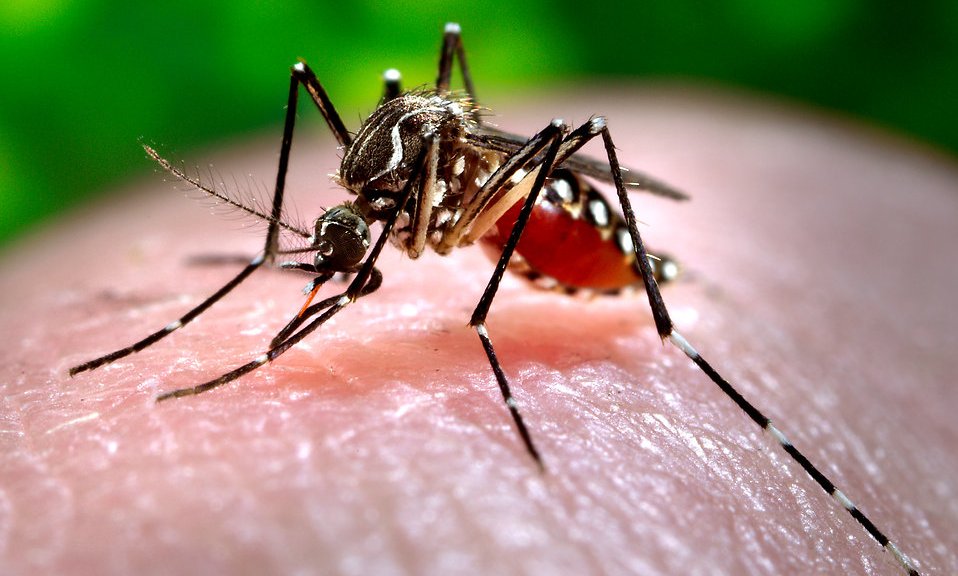
As you probably know Zika is already causing problems in an area outside of Miami, FL. CDC has taken the unusual step of issuing a travel warning there. 
Accurate clinician and patient information in the U.S. will become more critical, and your advice to others could save lives as the disease spreads.
 Some of the best evidence on what to teach is from CDC. These experts have reviewed the best available literature and developed these clear evidence-based clinical guidelines to
prevent sexual transmission of Zika. Such evidence-based guidelines are considered very STRONG evidence--some of the strongest out there!! (For more see: “I like my “I like my coffee (and my evidence) strong!”)
Note that I point out, as do they, that these guidelines are based on the best available evidence which continues to evolve. (It wasn’t that long ago when experts denied that Zika could be sexually transmitted. Now we know better.)
 Scientific evidence is not static. It is dynamic and ever evolving. This is not a problem with science, but is part of its very nature–that of discovery.
“Why this matters: Clinicians should continue to educate all patients about ZIKV sexual transmission risk, to conduct testing for all persons with possible sexual exposure, and to report all cases of ZIKV to local health authorities” (CDC, 2016).
Critical thinking: How might you use this information at work or with the broader public?
For more information: Check out CDC Zika Virus webpage
The public and lots of nurses have lots of questions. Our evidence-based knowledge is evolving. Here’s some of the latest (Aug/July 2016).
You can set up a free account with Lippincott to access this 3 page article that translates current research into practice for you.
O’Malley – Zika virus: What we know and do not know:  http://www.nursingcenter.com/pdfjournal?AID=3570052&an=00002800-201607000-00005&Journal_ID=54033&Issue_ID=3569996
Useless trivia, but interesting old quote from a detective on the ancient “Alvin & the  Chipmunks” cartoon: “Everyone with a nose knows the nose knows everything.”
Check out the very interesting story about a new antibiotic that may fight MRSA and VRE. A much needed medicinal weapon. Still lots we don’t know about how well it will work in humans and resistance to it or other unintended consequences.
Want more info? See this article by By Kai KupferschmidtJul. 27, 2016 http://www.sciencemag.org/news/2016/07/new-antibiotic-found-human-nose
Critical thinking: What do you already do to avoid adding to microbial resistance?
 “The Institute of Medicine (IOM) set a goal that, by 2020, the majority of healthcare practices and decisions would be evidence-based. … Yet…only three percent of the executive-level nurse leaders surveyed ranked EBNP as a top priority at their own organizations. What’s worse, more than half said EBNP is practiced at their organizations only “somewhat” or “not at all.” HTimothy at American Sentinel.
For full text see the source link: http://www.americansentinel.edu/blog/2016/07/19/strong-nursing-leadership-is-essential-to-evidence-based-practice/
Critical Thinking: Given all the demands of the healthcare  environment, how can we make this goal happen.
Don’t Go Pokemon Go ….& if you must, watch out! New privacy and safety dangers are being recorded almost every day. The game is full of health and computer hazards, and has potential to distract workers from their life-saving care.
What is the evidence? At this point mostly anecdotal reports and the anticipated possibility that healthcare workers could be distracted from life-saving work. You need to translate this evidence into action. Why would you do this with such relatively weak research evidence? Because the risks are far higher to ignore it, & essentially NO risks if you use the evidence. The BBB lists these problems & makes some suggestions based on incoming reports:
 Privacy: In order to play the game, users must allow the app to access other
  applications, such as maps and camera. The iOS version for the iPhone can access all Google data.
 Safety: Players should use the same safety precautions while playing the game that they would in any other outdoor setting, including caution in strange location.

Translating this evidence into practice? Think before you Pokemon Go, if at all. Talk to your patients–when people don’t feel well they are even more likely to be distracted.
Critical thinking? 1) List specific actions that you will do to promote privacy, safety and fight malware and infringement. These can range from “never download;never play” to…..? When developing this list specifically address the challenges above. 2) What about patient players? staff players? visitor players? How should you help them to be safe?
MYTH: There is no real payoff in engaging patients and families.
FACT: Health care organizations can reap many benefits from
“activated” patients and families – those who have the knowledge, skills and confidence to manage their own care.
How does engaging patients help? 1) It may increase quality of life by reducing falls, helping patients learn to manage chronic conditions. 2) It can reduce Underuse or Overuse of health services. 3) It may increases reimbursement through improved HCAHPS scores. And YOU may be more satisfied at work!
TWO EXAMPLES of positive results yielded from partnering with patients and families:
• One hospital that began involving patients and families in safety efforts after a highly publicized preventable death saw a culture shift that improved medication reconciliation and eliminated fatal medication errors during a 10-year period (Johnson & Abraham; Reinersten et al., 2008).
 • A health system that began seeking input from patients and families decreased nurse turnover from 15 percent to 5 percent in three years and improved patient, staff and physician satisfaction (Johnson & Abraham).
WHAT CAN I DO TO ENGAGE PATIENTS? Listen to your patients to identify their level of activation in their care as described, & communicate in ways that move them to the next level.
FOR MORE INFO, check out the source of above: Busting the Myths about Engaging Patients and Families in Patient Safety
CRITICAL THINKING: Think of a strategy that you ALREADY use or that you might start using to move patients up the stages of engagement in their own care. Be specific!