Last week’s blog focused on the strongest types of evidence that you might find when trying to solve a clinical problem. These are: #1 Systematic reviews, Meta-analyses, or Evidence-based clinical practice guidelines based on systematic review of RCTs; & #2 Randomized controlled trials. (For levels of evidence from strongest to weakest, see blog “I like my coffee (and my evidence) strong!”)
So after the two strongest levels of evidence what is the next strongest? #3 level is controlled trials without randomization. (Sometimes called quasi-experimental studies.)
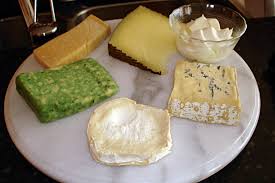
Here’s an example of a controlled trial without randomization: I take two groups of mice and test two types of cheese to find out which one mice like best. I do NOT randomly assign the mice to groups. The experimental group #1 loved Swiss cheese, & the control group #2 refused to eat the cheddar. I assume confidently that mice LOVE Swiss cheese…
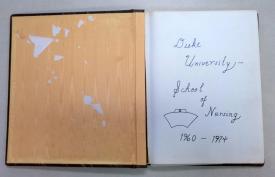
You can be a part of documenting such stories, including your own. Can I pique your interest with these examples about historical research?
1. Artifacts:Example = http://acif.org/The American Collectors of Infant Feeders:
CREDIT http://acif.org/
The American Collectors of Infant Feeders is a non-profit organization whose primary purpose is to gather and publish information pertaining to the feeding of infants throughout history. The collecting of infant feeders and related items is promoted.
2. Interviews:Example = http://www.oralhistory.org/ Want to do interviews of interesting faculty, students, leaders, “ordinary” nurses? Check out the Oral History Association In addition to fostering communication among its members, the OHA encourages standards of excellence in the collection, preservation, dissemination and uses of oral testimony.
3. Stories from the “ordinary:” Example: http://www.murphsplace.com/mother/main.htmlMy Mother’s War – “Helen T.Burrey was an American nurse who served as a Red Cross Nurse during World War I. She documented her experience in both a journal and a scrapbook which has been treasured by her daughter, Mary Murphy. Ms Murphy has placed many of these items on the Internet for people to access and it provides a first-hand account of that experience. Additionally she has a variety of links to other WWI resources.” (quoted from AAHN Resources online)
CREDIT http://e-anca.org/
4. Ethnic studies:Example=https://libguides.rowan.edu/blacknurses Black Nurses in History “This is a ‘bibliography and guide to web resources’ from the UMDNJ and Coriell Research Library. Included are Mamie O. Hail, Mary Eliza Mahoney, Jessie Sleet Scales, Mary Seacole, Mabel Keaton Staupers, Susie King Taylor, Sojourner Truth, Harriet Tubman.” (quoted from AAHN Resources online)
Critical thinking: Don’t forget to save your own materials. Your life is history! What in your life is most interesting? Have you written it down or dictated it into your iphone voice memo? There is GREAT interest in “ordinary” men and women. Many times items are tossed because they are “just letters” or “only old records,” or “stuff.” Just Don’t Do It.
So…after you do research or finish out your evidence-based practice project, you have to disseminate your findings, right? That means good writing skills are necessary.
I stumbled into the GRAMMAR PARTY blog today when I wondered whether or not to italicize coup d’état. Do you know? I didn’t. Check out this helpful resource.
Practice based in evidence (EBP) means that you must critique/synthesize evidence and then apply it to particular setting and populations using your best judgement. This means that you must discriminate about when (and when NOT) to apply the research. Be sure to use best professional judgment to particularize your actions to the situation!
Add to your repertoire of EBP tools,the Number Needed to Treat(NNT). This is not mumbo -jumbo. NNT explained here–short & sweet: http://www.thennt.com/thennt-explained/
Actually when it comes to quantitative data, there are 4 levels, but who’s counting? (Besides Goldilocks.)
Nominal (categorical) data are names or categories: (gender, religious affiliation, days of the week, yes or no, and so on)
Ordinal data are like the pain scale. Each number is higher (or lower) than the next but the distances between numbers are not equal. In others words 4 is not necessarily twice as much as 2; and 5 is not half of 10.
Interval data are like degrees on a thermometer. Equal distance between them, but no actual “0”. 0 degrees is just really, really cold.
Ratio data are those with real 0 and equal intervals (e.g., weight, annual salary, mg.)
(Of course if you want to collect QUALitative word data, that’s closest to categorical/nominal, but you don’t count ANYTHING. More on that another time.)
CRITICAL THINKING: Where are the levels in Goldilocks and the 3 levels of dataat this link: https://son.rochester.edu/research/research-fables/goldilocks.html ?? Would you measure soup, bed, chairs, bears, or other things differently? Why was the baby bear screaming in fright?
The difference between research and evidence-based practice (EBP) can sometimes be confusing, but the contrast between them is sharp. I think most of the confusion comes because those implementing both processes measure outcomes. Here are differences:
RESEARCH :The process of research (formulating an answerable question, designing project methods, collecting and analyzing the data, and interpreting themeaning of results) iscreating knowledge(AKA creating research evidence).A research project that has been written up IS evidence that can be used in practice. The process of research is guided by the scientific method.
EVIDENCE-BASED PRACTICE: EBP is using existing knowledge (AKA using research evidence) in practice. While researchers create new knowledge,
The creation of evidence obviously precedes its application to practice. Something must be made before it can be used. Research obviously precedes the application of research findings to practice. When those findings are applied to practice, then we say the practice is evidence-based.
A good analogy for how research & EBP differ & work together can be seen in autos.
Creating a car!
Designers & factory workers create new cars.
Using a car!
Driversuse existing cars that they choose according to preferences and best judgments about safety.
CRITICAL THINKING: 1) Why is the common phrase “evidence-based research” unclear? Should you use it? Why or why not? 2) What is a clinical question you now face. (e.g., C.Diff spread; nurse morale on your unit; managing neuropathic pain) and think about how the Stetler EBP model at http://www.nccmt.ca/registry/resource/pdf/83.pdf might help. Because you will be measuring outcomes, then why is this still considered EBP.
WHAT IS RESEARCH? Take < three minutes to check out: https://www.youtube.com/watch?v=v50ct9xJVKE . Listen for what research is and 2 basic ways to approach the answers to a research question: “Why is the sky blue?”
CRITICAL THINKING: What is a recent problem you’ve experienced in clinical practice? Write out a positivist question and an interpretist research question related to that same clinical problem.
“OBJECTIVE: To determine which factors influence whether Santa Claus will visit children in hospital on Christmas Day.
DESIGN: Retrospective observational study.
SETTING: Paediatric wards in England, Northern Ireland, Scotland, and Wales.
PARTICIPANTS: 186 members of staff who worked on the paediatric wards (n=186) during Christmas 2015.
MAIN OUTCOME MEASURES: Presence or absence of Santa Claus on the paediatric ward during Christmas 2015. This was correlated with rates of absenteeism from primary school, conviction rates in young people (aged 10-17 years), distance from hospital to North Pole (closest city or town to the hospital in kilometres, as the reindeer flies), and contextual socioeconomic deprivation (index of multiple deprivation).
RESULTS: Santa Claus visited most of the paediatric wards in all four countries: 89% in England, 100% in Northern Ireland, 93% in Scotland, and 92% in Wales. The odds of him not visiting, however, were significantly higher for paediatric wards in areas of higher socioeconomic deprivation in England (odds ratio 1.31 (95% confidence interval 1.04 to 1.71) in England, 1.23 (1.00 to 1.54) in the UK). In contrast, there was no correlation with school absenteeism, conviction rates, or distance to the North Pole.
CONCLUSION: The results of this study dispel the traditional belief that Santa Claus rewards children based on how nice or naughty they have been in the previous year. Santa Claus is less likely to visit children in hospitals in the most deprived areas. Potential solutions include a review of Santa’s contract or employment of local Santas in poorly represented region.” Park et al. (2016).BMJ. 2016 Dec 14;355:i6355. doi: 10.1136/bmj.i6355.
How would you translate this into practice? Questions to help you with this endeavor:Where does this retrospective, observational research fall on the evidence hierarchy? Is it quantitative or qualitative research? Experimental or non-experimental research? How generalizable is this research? What are the risks,resources, and readiness of people in potentially using the findings (Stetler & Marram, 1996; Stetler, 2001)? What might happen if you try to apply the abstract information to practice without reading the full article? Do you think the project done in Europe is readily applicable to America? What would be the next level of research that you might undertake to better confirm these findings?
It’s that time of year again! Enjoy this illustration of how to use one model in applying best, available evidence to practice. Have fun and a merry and bright season.
How strong is the evidence regarding our holiday Santa Claus (SC) practices? And what are the opportunities on this SC topic for new descriptive, correlation, or experimental research? Although existing evidence generally supports SC, in the end we may conclude, “the most real things in the world are those that neither children nor men can see” (Church, as cited in Newseum, n.d.).






 Practice based in evidence (EBP) means that you must critique/synthesize evidence and then apply it to particular setting and populations using your best judgement. This means that you must discriminate about when (and when NOT) to apply the research. Be sure to use best professional judgment to particularize your actions to the situation!
 CRITICAL THINKING: Check out this or other analyses at the site. How does the info on antihypertensives for mild hypertension answer the question of whether more is better? Are there patients in whom you SHOULD treat mild HTN? (“We report, you decide.”)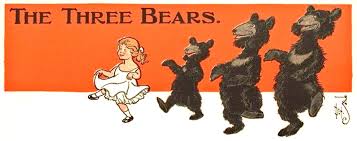

 meaning of results) is
 research evidence) in practice. While researchers create new knowledge,


 answers to a research question: “Why is the sky blue?”
 Go to full article
 during Christmas 2015. This was correlated with rates of absenteeism from primary school, conviction rates in young people (aged 10-17 years), distance from hospital to North Pole (closest city or town to the hospital in kilometres, as the reindeer flies), and contextual socioeconomic deprivation (index of multiple deprivation).
 Is it quantitative or qualitative research? Experimental or non-experimental research? How generalizable is this research? What are the risks,resources, and readiness of people in potentially using the findings (Stetler & Marram, 1996; Stetler, 2001)? What might happen if you try to apply the abstract information to practice without reading the full article? Do you think the project done in Europe is readily applicable to America? What would be the next level of research that you might undertake to better confirm these findings?