Tag Archives: evidence based practice

“Here Comes Santa Claus?” What IS the Evidence?

How strong is the evidence regarding our holiday Santa Claus (SC) practices? And what are the opportunities on this SC topic for new descriptive, correlation, or experimental research?  Although existing evidence generally supports SC, in the end we may conclude, “the most real things in the world are those that neither children nor men can see” (Church, as cited in Newseum, n.d.).santa3

If you want to know the answers, check out: Highfield, M.E.F. (2011).  Here comes Santa Claus: What’s the evidence? Advanced Emergency Nursing Journal, 33(4), 354-6. doi: http://dx.doi.org.libproxy.csun.edu/10.1097/TME.0b013e318234ead3   Using bona fide published work, the article shows you how to evaluate the strength of evidence and how to apply it to practice.   You can request a full-text for your personal use from your library or from the author via www.researchgate.net/home .  

Critical thinking: Check out this related research study with fulltext available through PubMed: Black Pete through the eyes of Dutch children
(https://www.ncbi.nlm.nih.gov/pubmed/27322583 ).   Write a follow-up research question based on the findings of this study & post in comments below.

For more info: For those unfamiliar with ResearchGate, it is a site where you can track authors who publish in your area of interest, and you can set up your own profile so that people can track your work.  Take a look.   

Bake it into your project cake!

In the last post we compared stronger direct measures of outcomes with weaker indirect
measuremeasures of project outcomes.

So…what direct measures are you “baking into your project cake”? What do you hope will be your project outcome & what measurement will show that you achieved it? –pain scores? weight? skin integrity? patient reports of a sound night’s sleep?  Share your story.  Help others learn.

Or if you just stuck with HCAHPS (or other) as outcome measure, explain why that was the best choice for your project.  (Maybe in your case it was a direct measure!)

Happy measuring!

For More Info on direct vs. indirect measures & Critical thinking: Check out t Direct speaking about INdirect outcomes: HCAHPS as a measurementquestion

Your chance to shine!

Join the Honor Society of Nursing, Sigma Theta Tau International and more than 2,000 of your peers in Indianapolis, Indiana, USA, 28 October – 1 November 2017, for the 44th Biennial Convention. Experience STTI’s largest event, which features more than 800 oral and poster presentations, networking opportunities, and more.

Call for Abstracts
Opportunities are now available to submit abstracts for the 44th Biennial Convention.
Submission Deadline: 9 November 2016.

For more information: http://www.nursingsociety.org/connect-engage/meetings-events/biennial-convention/call-for-abstracts

“Two roads diverged in a yellow wood, and sorry I could not travel both and be one traveler, long I stood and looked down one as far as I could…” R.Frost

Below is my adaptation of one of the clearest representations that I have ever seen of when the roads diverge into quality improvement, evidence-based practice, & research.  Well done, Dr. E.Schenk PhD MHI, RN-BC!qi-ebp-research-flow-chart


It was the best of evidence; it was the worst of evidence.

evidencebased practiceEvidence-based practice = best available evidence + expert clinical judgment + patient & family values/preferences.

When clinicians diagnose & treat based on outdated or inadequate knowledge, then outcomes are at best uncertain.  The internet itself is a poor information source; & colleagues may be no more up-to-date that you.

Good sources are the world-wide Cochrane Collaboration and the specific evidence-based Homepractice journals that are beginning to grow–these take best information from the research report all the way through clinical recommendations.   For research reports per se, PubMed is a comprehensive, U.S. tax-supported Findingsdatabase; & there when you find information that fits using your key search terms, you can also look for related articles & get full-text through interlibrary loan or online.  Another strategy is take the article that fits your clinical issue to your librarian, and ask for help in finding more research on the identical clinical issue.
While no one can read everything in the literature, everyone can read something. You can do a focused review on any particular problem.

Critical thinking:  Is there a clinical issue that you think could use a better solution?  Plug related words into PubMed & see what you can learn.question

For more information see fulltext at: http://www.ncbi.nlm.nih.gov/pmc/articles/PMC226388/

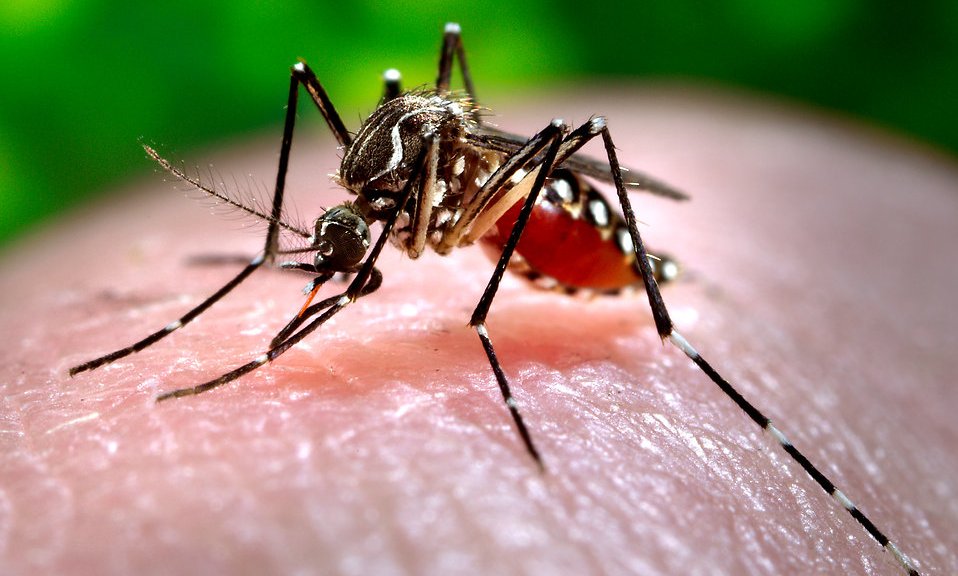
Zika Virus: What we know and do not know (O’Malley, 2016)

The public and lots of nurses have lots of questions.   Our evidence-based knowledge is evolving.  Here’s some of the latest (Aug/July 2016).

You can set up a free account with Lippincott to access this 3 page article that translates current research into practice for you.

O’Malley – Zika virus: What we know and do not know: 16743-close-up-of-a-mosquito-feeding-on-blood-pvhttp://www.nursingcenter.com/pdfjournal?AID=3570052&an=00002800-201607000-00005&Journal_ID=54033&Issue_ID=3569996

New Antibiotic Found in Human Nose

Useless trivia, but interesting old quote from a detective on the ancient “Alvin & the nOSEChipmunks” cartoon: “Everyone with a nose knows the nose knows everything.” 

Check out the very interesting story about a new antibiotic that may fight MRSA and VRE.  A much needed medicinal weapon.  Still lots we don’t know about how well it will work in humans and resistance to it or other unintended consequences.

Want more info? See this article by By Kai KupferschmidtJul. 27, 2016   http://www.sciencemag.org/news/2016/07/new-antibiotic-found-human-nose

Critical thinking: What do you already do to avoid adding to microbial resistance?


Strong nursing leadership is essential to evidence-based practice

priority“The Institute of Medicine (IOM) set a goal that, by 2020, the majority of healthcare practices and decisions would be evidence-based.Yet…only three percent of the executive-level nurse leaders surveyed ranked EBNP as a top priority at their own organizations. What’s worse, more than half said EBNP is practiced at their organizations only “somewhat” or “not at all.”  Posted on July 19, 2016HTimothy  at American Sentinel.   

For full text see the source link: http://www.americansentinel.edu/blog/2016/07/19/strong-nursing-leadership-is-essential-to-evidence-based-practice/

Critical Thinking: Given all the demands of the healthcare questionenvironment, how can we make this goal happen.   

!!Don’t Go Pokemon Go!! Privacy, malware, safety, and infringement dangers

Don’t Go Pokemon Go ….& if you must, watch out!  New privacy and safety dangers are being recorded almost every day.  The game is full of health and computer hazards, and has potential to distract workers from their life-saving care.

What is the evidence?  At this point mostly anecdotal reports and the anticipated possibility that healthcare workers could be distracted from life-saving work.  You need to translate this evidence into action.  Why would you do this with such relatively weak research evidence?  Because the risks are far higher to ignore it, & essentially NO risks if you use the evidence.   The BBB lists these problems & makes some suggestions based on incoming reports:

Translating this evidence into practice?  Think before you  Pokemon Go, if at all.  Talk to your patients–when people don’t feel well they are even more likely to be distracted.

Critical thinking?  1) List specific actions that you will do to promote privacy, safety and fight malware and infringement.  These can range from “never download;never play” to…..?    When developing this list specifically address the challenges above. 2) What about patient players?  staff players?  visitor players?  How should you help them to be safe?question


Who ya gonna call? Myth Busters!!

MYTH: There is no real payoff in engaging  patients and families.

FACT:  Health care organizations can reap many benefits fromMythBUSted
“activated” patients and families – those who have the knowledge, skills and confidence to manage their own care.

How does engaging patients help?   1) It may increase quality of life by reducing falls, helping patients learn to manage chronic conditions. 2) It can reduce Underuse or Overuse of health services. 3) It may increases reimbursement through improved HCAHPS scores.  And YOU may be more satisfied at work!

TWO EXAMPLES of positive results yielded from partnering with patients and families:
• One hospital that began involving patients and families in safety efforts after a highly publicized preventable death saw a culture shift that improved medication reconciliation and eliminated fatal medication errors during a 10-year period (Johnson & Abraham; Reinersten et al., 2008).
Satisfaction• A health system that began seeking input from patients and families decreased nurse turnover from 15 percent to 5 percent in three years and improved patient, staff and physician satisfaction (Johnson & Abraham).

WHAT CAN I DO TO ENGAGE PATIENTS?  Listen to your patients to identify their level of activation in their care as described, & communicate in ways that move them to the nextNURSEPatient level.

  • At stage 1, people do not yet grasp that they must play an active role in their own
    health, they may still believe that they can just be a passive recipient of care….
  • At stage 2, people may lack the basic facts or have not connected the facts into a larger understanding about their health or recommended health regimens….
  • At stage 3, people have the key facts and are beginning to take action but may lack confidence and skill to support new behaviors….
  • At stage 4, people have adopted new behaviors but may not be able to maintain them in the face of life stress or health crises.”  [source: Hibbard et al. at http://www.ncbi.nlm.nih.gov/pmc/articles/PMC1955271/]

mythVStruth

FOR MORE INFO, check out the source of above:  Busting the Myths about Engaging Patients and Families in Patient Safetyquestion

CRITICAL THINKING: Think of a strategy that you ALREADY use or that you might start using to move patients up the stages of engagement in their own care. Be specific!