
Welcome back after a bit of silence on my end!![welcome[1]](https://discoveringyourinnerscientist.com/wp-content/uploads/2017/03/welcome1.gif?w=163&h=119)
In the last “Quasi-wha??” blogpost, I described 1 type of experimental design: Quasi-experimental. To review… In quasi-experimental designs, the researcher manipulates some variable, but either 1) doesn’t randomly assign subjects to a control and experimental group OR 2) doesn’t have a control group at all.
For example, the researcher may introduce pet therapy on unit #1 and avoid pet therapy on unit #2 and then afterwards compare the anxiety levels of patients on the 2 units. That study has a control group (unit #2), but because patients weren’t (& probably couldn’t be) randomly assigned to the units, this would be a quasi-experimental study. The control group in this pet therapy case is what researchers call a “non-equivalent control group.” Non-equivalent means the groups are different in ways that might affect study results! [Note: For review of what constitutes a true experimental study see first part of “Quasi-wha??” blogpost.]
 Herein lies a weak link in the cause-and-effect chain. Quasi- designs are NOT as strong as true experimental designs because something other than our treatment (in this case pet therapy) may have created any difference in outcomes (e.g., anxiety levels). Why? Here’s your answer.

In an experimental study, randomly assigning subjects to a

control and a separate experimental group means that all the little, variable weirdities of all subjects are equally distributed to each group. Each group is the same mix of different types of people. This means we can assume that both groups are the exact same type of
people in regard to things that may influence study outcomes, such as attitudes, values, preferences, beliefs, anxiety level, psychology, physiology and so on.

In contrast, in the quasi-experimental pet therapy example above, there is probably something that caused a certain type of person to be on unit #1 and a different type to be on unit #2. Maybe it was their diagnosis, their doctor, their type of surgery, or other. Thus, we cannot assume that people in unit #1 and unit #2 groups are the same before pet therapy, and so any differences between them after pet therapy might have already existed.
So why do quasi-experimental studies at all?? There are great reasons! Stay tuned for next blogpost.
Critical thinking: Check out free full-text, quasi-experiment Gough et al., (2017). Tweet for Behavior Change: Using Social Media for the Dissemination of Public Health Messages.
- What makes this a quasi-experimental design? [Hint: Does it have a control group? Were subjects randomly assigned to groups? Are both randomization & control group missing?]
- What might have caused the change in behavior, instead of the tweets?
- What contribution do you think the study makes to improving practice?
For more information on studies with non-randomized control groups see “Of Mice & Cheese” or comment below. Let’s talk!

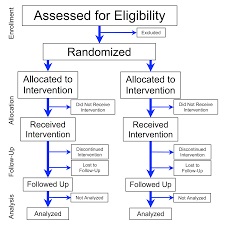
 In a quasi experimental design


 I love sharing a great resource, don’t you?
 You may even know that meta-analyses of randomized controlled trials are the strongest type of research evidence and that case studies are considered the weakest. (Expert opinion that is not research at all is even below that.)
 controlled trial is? If not or if you want a review,
 will know the technical things you need to plan into your study in order to make the study ‘sparkle’ and to get approval from human subjects review committees. The person doesn’t have to be an expert on your topic. You fill that role, or soon will!
 librarians are worth their weight in gold! Librarians can help you find what others have learned about your topic already, and then you can build on that knowledge. [note: check out
  This will help you to establish whether or not there really is a problem to be solved. Descriptive studies are much simpler to conduct and analyze than experimental studies in which you measure something, make an improvement, and then see if the improvement improved things. For example, you would measure sleep interruptions, institute a quiet time, and then measure sleep interruptions again to see if there were fewer. [check out
  Every researcher from time to time can feel ‘bogged down’ or bored with what they are doing, & one of the best protections against that is making sure you think the topic is super-interesting in the first place. If you get a little bored or stuck later don’t be surprised; it just means you’re pretty normal. Those stuck times might even feel like “hitting the wall” in a long race, and once you get past it things get better. Remind yourself why you loved the topic in the first place. Talk to your PhD friend or a mentor for encouragement. Take a little break. Read something really interesting about your topic.






 KEY POINTS:
 no, the response tells us only how the patient remembers it.
 see
see  (
(
 measures
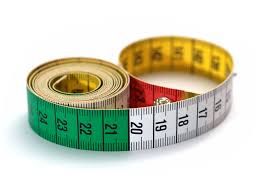

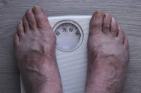 You don’t merely ask them how much they weigh
  en directly measure how many patients started using it after you started your intervention and their pain scores.

 workplace compassion influence patient perceptions?