For RNs wanting to pursue a doctorate, it is important to pick a degree that best matches your anticipated career path. The shortest simplest explanation of the difference in these degrees is probably:
PhD – If you want to be a nurse scientist & teach in a university & conduct nursing research.
DNP– If you want to be an advanced practice nurse, who primarily uses research in leadership, QI, patient care, etc. along with measuring project outcomes.
Of course, some DNPs teach in universities, particularly in DNP programs. PhDs may otherwise be better prepared for faculty roles. I encourage you to look carefully at the curriculum at the school where you hope to study and expectations of a university where you hope to teach. Speak with faculty, & choose wisely.
Yes.It is easier to do things the way we’ve always done them (and been seemingly successful).
Yet, most of us want to work more efficiently or improve our own or patients’ health.
So, there you have the problem: a tension between status quo and change. Perhaps taking the easy status quo is why ‘everyday nurses’ don’t read research.
Ralph (2017) writes encountering 3 common mindsets that keep nurses stuck in the rut of refusing to examine new research:
I’m not a researcher.
I don’t value research.
I don’t have time to read research.
But, he argues, you have a choice: you can go with the status quo or challenge it (Ralph). And (admit it), haven’t we all found that the status quo sometimes doesn’t work well so that we end up
choosing a “work around,” or
ignoring/avoiding the problem or
leaving the problem for someone else or
….[well….,you pick an action.]
How to begin solving the problem of not reading research? Think of a super-interesting topic to you and make a quick trip to PubMed.com. Check out a few relevant abstracts and ask your librarian to get the articles for you. Read them in the nurses’ lounge so others can, too.
Let me know how your challenge to the status quo works out.
Bibliography: Fulltext available for download through https://www.researchgate.net/ of Ralph, N. (2017 April). Editorial: Engaging with research & evidence is a nursing priority so why are ‘everyday’ nurses not reading the literature, ACORN 30(3):3-5. doi: 10.26550/303/3.5
Reliability & validity are terms that refer to the consistency and accuracy of a quantitative measurement questionnaire, technical device, ruler, or any other measuring device. It means that the outcome measure can be trusted and is relatively error free.
Reliability– This means that the instrument measures CONSISTENTLY
Validity – This means that the instrument measures ACCURATELY. In other words it measures what it is supposed to measure and not something else.
For example: If your bathroom scale measures weight, then it is a valid measure of weight (e.g. it doesn’t measure BP or stress). You might say it had high validity. If your bathroom scale measures your weight as the same thing when you step on and off of it several times then it is measuring weight reliably or consistently; and you might say it has high reliability.
Last week’s blog focused on the strongest types of evidence that you might find when trying to solve a clinical problem. These are: #1 Systematic reviews, Meta-analyses, or Evidence-based clinical practice guidelines based on systematic review of RCTs; & #2 Randomized controlled trials. (For levels of evidence from strongest to weakest, see blog “I like my coffee (and my evidence) strong!”)
So after the two strongest levels of evidence what is the next strongest? #3 level is controlled trials without randomization. (Sometimes called quasi-experimental studies.)
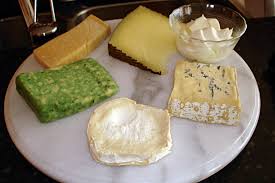
Here’s an example of a controlled trial without randomization: I take two groups of mice and test two types of cheese to find out which one mice like best. I do NOT randomly assign the mice to groups. The experimental group #1 loved Swiss cheese, & the control group #2 refused to eat the cheddar. I assume confidently that mice LOVE Swiss cheese…
You can be a part of documenting such stories, including your own. Can I pique your interest with these examples about historical research?
1. Artifacts:Example = http://acif.org/The American Collectors of Infant Feeders:
CREDIT http://acif.org/
The American Collectors of Infant Feeders is a non-profit organization whose primary purpose is to gather and publish information pertaining to the feeding of infants throughout history. The collecting of infant feeders and related items is promoted.
2. Interviews:Example = http://www.oralhistory.org/ Want to do interviews of interesting faculty, students, leaders, “ordinary” nurses? Check out the Oral History Association In addition to fostering communication among its members, the OHA encourages standards of excellence in the collection, preservation, dissemination and uses of oral testimony.
3. Stories from the “ordinary:” Example: http://www.murphsplace.com/mother/main.htmlMy Mother’s War – “Helen T.Burrey was an American nurse who served as a Red Cross Nurse during World War I. She documented her experience in both a journal and a scrapbook which has been treasured by her daughter, Mary Murphy. Ms Murphy has placed many of these items on the Internet for people to access and it provides a first-hand account of that experience. Additionally she has a variety of links to other WWI resources.” (quoted from AAHN Resources online)
CREDIT http://e-anca.org/
4. Ethnic studies:Example=https://libguides.rowan.edu/blacknurses Black Nurses in History “This is a ‘bibliography and guide to web resources’ from the UMDNJ and Coriell Research Library. Included are Mamie O. Hail, Mary Eliza Mahoney, Jessie Sleet Scales, Mary Seacole, Mabel Keaton Staupers, Susie King Taylor, Sojourner Truth, Harriet Tubman.” (quoted from AAHN Resources online)
Critical thinking: Don’t forget to save your own materials. Your life is history! What in your life is most interesting? Have you written it down or dictated it into your iphone voice memo? There is GREAT interest in “ordinary” men and women. Many times items are tossed because they are “just letters” or “only old records,” or “stuff.” Just Don’t Do It.
So…after you do research or finish out your evidence-based practice project, you have to disseminate your findings, right? That means good writing skills are necessary.
I stumbled into the GRAMMAR PARTY blog today when I wondered whether or not to italicize coup d’état. Do you know? I didn’t. Check out this helpful resource.
Practice based in evidence (EBP) means that you must critique/synthesize evidence and then apply it to particular setting and populations using your best judgement. This means that you must discriminate about when (and when NOT) to apply the research. Be sure to use best professional judgment to particularize your actions to the situation!
Add to your repertoire of EBP tools,the Number Needed to Treat(NNT). This is not mumbo -jumbo. NNT explained here–short & sweet: http://www.thennt.com/thennt-explained/
Actually when it comes to quantitative data, there are 4 levels, but who’s counting? (Besides Goldilocks.)
Nominal (categorical) data are names or categories: (gender, religious affiliation, days of the week, yes or no, and so on)
Ordinal data are like the pain scale. Each number is higher (or lower) than the next but the distances between numbers are not equal. In others words 4 is not necessarily twice as much as 2; and 5 is not half of 10.
Interval data are like degrees on a thermometer. Equal distance between them, but no actual “0”. 0 degrees is just really, really cold.
Ratio data are those with real 0 and equal intervals (e.g., weight, annual salary, mg.)
(Of course if you want to collect QUALitative word data, that’s closest to categorical/nominal, but you don’t count ANYTHING. More on that another time.)
CRITICAL THINKING: Where are the levels in Goldilocks and the 3 levels of dataat this link: https://son.rochester.edu/research/research-fables/goldilocks.html ?? Would you measure soup, bed, chairs, bears, or other things differently? Why was the baby bear screaming in fright?
The difference between research and evidence-based practice (EBP) can sometimes be confusing, but the contrast between them is sharp. I think most of the confusion comes because those implementing both processes measure outcomes. Here are differences:
RESEARCH :The process of research (formulating an answerable question, designing project methods, collecting and analyzing the data, and interpreting themeaning of results) iscreating knowledge(AKA creating research evidence).A research project that has been written up IS evidence that can be used in practice. The process of research is guided by the scientific method.
EVIDENCE-BASED PRACTICE: EBP is using existing knowledge (AKA using research evidence) in practice. While researchers create new knowledge,
The creation of evidence obviously precedes its application to practice. Something must be made before it can be used. Research obviously precedes the application of research findings to practice. When those findings are applied to practice, then we say the practice is evidence-based.
A good analogy for how research & EBP differ & work together can be seen in autos.
Creating a car!
Designers & factory workers create new cars.
Using a car!
Driversuse existing cars that they choose according to preferences and best judgments about safety.
CRITICAL THINKING: 1) Why is the common phrase “evidence-based research” unclear? Should you use it? Why or why not? 2) What is a clinical question you now face. (e.g., C.Diff spread; nurse morale on your unit; managing neuropathic pain) and think about how the Stetler EBP model at http://www.nccmt.ca/registry/resource/pdf/83.pdf might help. Because you will be measuring outcomes, then why is this still considered EBP.

 best matches your anticipated career path. The shortest simplest explanation of the difference in these degrees is probably:










 Practice based in evidence (EBP) means that you must critique/synthesize evidence and then apply it to particular setting and populations using your best judgement. This means that you must discriminate about when (and when NOT) to apply the research. Be sure to use best professional judgment to particularize your actions to the situation!
 CRITICAL THINKING: Check out this or other analyses at the site. How does the info on antihypertensives for mild hypertension answer the question of whether more is better? Are there patients in whom you SHOULD treat mild HTN? (“We report, you decide.”)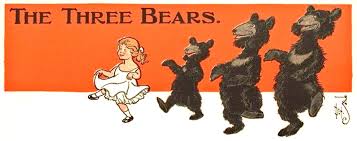

 meaning of results) is
 research evidence) in practice. While researchers create new knowledge,

