Not Just The Thought That Counts! (or is it?) Evidence-based gift giving.

Is it just the thought that counts?  or not?   (Probably depends on the relationship between giver & recipeient as per Paul Tournier’s The Meaning of Gifts that I highly recommend.)

In the meantime enjoy this article in the Washington Post on the holiday evidence for picking the best kinds of gifts.   OR as it is actually titled: “The trick to not giving a terrible gift this year”

Critical Thinking: Note the outcome measures cited for each study:

  1. Were they direct or indirect; & what is the advantage of eachgifts
  2. Were they self-report or observation; & what are the pros & cons of each?
  3. Were the studies descriptive? or experimental?   What does that tell you about cause & effect?
  4. Read Tournier’s tiny book, The Meaning of Gifts & draw your own conclusions.

For more info:  Ask yourself what you would most like for Christmas & check out your friends wishlists!   Check some of the studies cited in the Washington Post article, including Gino & Flynn (2011) evidence on preferences for $, solicited gifts, & unsolicited gifts.  The findings might surprise you:  http://www.sciencedirect.com/science/article/pii/S0022103111000801


“Here Comes Santa Claus?” What IS the Evidence?

How strong is the evidence regarding our holiday Santa Claus (SC) practices? And what are the opportunities on this SC topic for new descriptive, correlation, or experimental research?  Although existing evidence generally supports SC, in the end we may conclude, “the most real things in the world are those that neither children nor men can see” (Church, as cited in Newseum, n.d.).santa3

If you want to know the answers, check out: Highfield, M.E.F. (2011).  Here comes Santa Claus: What’s the evidence? Advanced Emergency Nursing Journal, 33(4), 354-6. doi: http://dx.doi.org.libproxy.csun.edu/10.1097/TME.0b013e318234ead3   Using bona fide published work, the article shows you how to evaluate the strength of evidence and how to apply it to practice.   You can request a full-text for your personal use from your library or from the author via www.researchgate.net/home .  

Critical thinking: Check out this related research study with fulltext available through PubMed: Black Pete through the eyes of Dutch children
(https://www.ncbi.nlm.nih.gov/pubmed/27322583 ).   Write a follow-up research question based on the findings of this study & post in comments below.

For more info: For those unfamiliar with ResearchGate, it is a site where you can track authors who publish in your area of interest, and you can set up your own profile so that people can track your work.  Take a look.   

What are you asking? (or “Can HCAHPS sometimes be a DIRECT measure?”)

In a prior blog (Direct speaking about INdirect outcomes: HCAHPS as a measurement*), I argued that HCAHPS questions were indirect measures of outcomes.  Indirect measures are weaker than direct measures because they are influenced by tons of variables that have nothing to do with the outcome of interest.  But wait!! There’s more!  HCAPS can sometimes be a DIRECT measure; it all depends on what you want to know.

(If you know this, then you are way ahead of many when it comes to measuring outcomes accurately!!)

KEYKEY POINTS:

  • If your research question is what do patients remember about hospitalization then HCAHPS is a DIRECT measure of what patients remember.  
  • However if your research question is what did hospital staff actually do  then HCHAPS is an INDIRECT* measure of what staff did. 

What is HCAHPS?  HCAHPS (pronounced “H-caps”)  questions are patient perceptions of what happened, which may or may not be what actually happened.    Patients are asked to remember their care that happened in the past, and memories may be less than accurate. (See this link for more on what HCAHPS is: http://www.hcahpsonline.org/Files/HCAHPS_Fact_Sheet_June_2015.pdf )

Example:  HCAHPS question #16 is, “Before giving you any new medicine, how often did hospital staff tell you what the medicine was for?”    Whether the patient answers yes or thinkerno, the response tells us only how the patient remembers it.

Why is this important?     

  • Because if you want to know whether or not RNs actually taught inpatients about their medications, then for the most direct & accurate measure you will have to observe RNs .
  • However, if you want to know whether patients remember RNs teaching them about discharge medications, then HCAHPS question #16 is one of the most direct & accurate measure of what they remember.

*FOR MORE INFORMATION on why you want to use DIRECT measures SanDiegoCityCollegeLearningResource_-_bookshelfsee https://discoveringyourinnerscientist.com/2016/11/04/direct-speaking-about-idirect-outcomes-hcahps-as-a-measurement/

CRITICAL THINKING Pick any HCAHPS question at this link and write a research question that for which it would be a DIRECT outcome measure: question(http://www.hcahpsonline.org/files/March%202016_Survey%20Instruments_English_Mail.pdf)

For your current project, how are you DIRECTLY measuring outcomes?

Bake it into your project cake!

In the last post we compared stronger direct measures of outcomes with weaker indirect
measuremeasures of project outcomes.

So…what direct measures are you “baking into your project cake”? What do you hope will be your project outcome & what measurement will show that you achieved it? –pain scores? weight? skin integrity? patient reports of a sound night’s sleep?  Share your story.  Help others learn.

Or if you just stuck with HCAHPS (or other) as outcome measure, explain why that was the best choice for your project.  (Maybe in your case it was a direct measure!)

Happy measuring!

For More Info on direct vs. indirect measures & Critical thinking: Check out t Direct speaking about INdirect outcomes: HCAHPS as a measurementquestion

Direct speaking about INdirect outcomes: HCAHPS as a measurement

When you first plan a project, you need to know what OUTCOMES you want to achieve.  You need STRONG outcomes to show your project worked! imagesCALQ0QK9

Outcome measures are tricky & can be categorized into Indirect & Direct measures:

  1. INDIRECT outcome measures are often affected by many factors, not just your innovation
  2. DIRECT outcome measures are specific to what you are trying to accomplish.

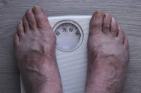
For example: If you want to know your patient’s weight, you put them on the scale (direct). weight-scaleYou don’t merely ask them how much they weigh (indirect).
Another example?  If you planned music to reduce pain, you might a) measure how many patients were already using music and their pain scores (& perhaps those not using music and their pain scores), b) begin your music intervention, and c) thmusicen directly measure how many patients started using it after you started your intervention and their pain scores.  These data DIRECTLY target your inpatient outcomes versus looking at INDIRECT HCAHPS answers of discharged patients’ feelings after the fact in response to “During this hospital stay, how often was your pain well controlled?”

Nurses often decide to measure their project outcomes ONLY with indirect HCAHPS scores.  I hope you can see this is not as good as DIRECT measures.

So why use HCAHPS at all?measuring-tape
  • They reflect institutional priorities related to quality and reimbursement
  • Data are already collected for you
  • Data are available for BEFORE and AFTER comparisons of your project outcomes
  • It doesn’t cost you any additional time or money to get the data

Disadvantages of indirect HCAHPS measures?

  • HCAHPS data are indirect measures that are affected by lots of different things, and so they may have little to do with effect of your project.
  • HCAHPS responders often do Not represent all patients because the number responding is so small–sometimes just 1 or 2

Still, I think it’s good to include HCAHPS.  Just don’t limit yourself to that. Include also a DIRECT measure of outcomethat targets the precisely what you hope will be the result of your study.

imagesCALQ0QK9You need STRONG outcomes to convince others that your project works to improve care!

CRITICAL THINKING:  McClelland, L.E., &  Vogus, T.J. (2014) used HCHAPS as an outcome measure in their study, Compassion practices & HCAHPS: Does rewarding and supporting questionworkplace compassion influence patient perceptions?    What were the strengths & weaknesses of using HCHAPS in this study? [hint: check out the discussion section]  What would be a good direct measure that you could add to HCAHPS outcomes to improve the study?

FOR MORE INFORMATION:  Whole books of measurement instruments are available through the library or a librarian can help you search for something that will measure motivation, pain, anxiety, medication compliance, or whatever it is you are looking for!!  You can limit your own literature searches by selecting “instrument” as part of your search, or you can consult with a nurse researcher for more help.

A FAB resource if you want to let your light shine: Writing for publication

sunshineWant to write for publication?   CHECK OUT NURSE AUTHOR & EDITOR as one of the best places to learn to improve your writing:  http://naepub.com/


A few suggestions from me

  1. You should have the goal of disseminating a project that will help others. Just trying to publish “something” won’t take you far.   Figure out the unique twist of your ideas.  Talk it over with colleagues & see what they find interesting.
  2. Select as many journals from this list or other lists that you think might be interested:    https://nursingeditors.com/journals-directory/
  3. Write a query email to each journal to see if they are interested.  NOTE: some journals will tell you what format your query should follow.  You can write as many query letters as you want.
  4. Pick a journal from those interested.   YOU CAN SUBMIT YOUR ARTICLE TO ONLY 1 JOURNAL at a time.  If that journal rejects you can then submit to 1 other, and so on.
  5. Edit your paper with that journal’s audience in mind.writing-hand
  6. Get a peer to read thoroughly and critique your article!  THEN you have to LISTEN to all their concerns.  If something is unclear to a peer, it will probably be unclear to a peer-reviewer.
  7. Format & submit EXACTLY, EXACTLY as they ask on the journal instructions to authors.  (If you want to annoy editors and reviewers just ignore their instructions to potential authors.)
  8. Wait & keep your fingers crossed
  9. If they turn back to you for revisions that is a GOOD SIGN.  It means they’re interested and you should address every concern.
  10. Resubmit

question1FOR MORE INFORMATION: Check our Nurse Author & Editor for sure! http://naepub.com/


Your chance to shine!

Join the Honor Society of Nursing, Sigma Theta Tau International and more than 2,000 of your peers in Indianapolis, Indiana, USA, 28 October – 1 November 2017, for the 44th Biennial Convention. Experience STTI’s largest event, which features more than 800 oral and poster presentations, networking opportunities, and more.

Call for Abstracts
Opportunities are now available to submit abstracts for the 44th Biennial Convention.
Submission Deadline: 9 November 2016.

For more information: http://www.nursingsociety.org/connect-engage/meetings-events/biennial-convention/call-for-abstracts

Ouch! Whose Pain Feels Worse?

levels-of-evidenceIs pain experience as diverse as our populations?  This week I came across an interesting meta-analysis.

A meta-analysis (MA) is one of the strongest types of evidence there is. Some place it at the top; others, 2nd after evidence-based clinical practice guidelines.  (For more on strength of  evidence, click here.)

MA is not merely a review of literature, but is a statistical integration of studies on the same topic.  MA that is based on integration of randomized controlled trials experiment(RCTs) or experimental studies is the strongest type of MA.  MA based on descriptive or non-experimental studies is  a little less strong, because it just describes things as they seem to be; & it cannot show that one thing causes another.

MA example: This brand, new MA included 41  peer-reviewed, English-language, experimental studies with humans:  Kim HJ, Yang GS, Greenspan JD, Downton KD, Griffith KA, Renn CL, Johantgen M, Dorsey SG. Racial and ethnic differences in experimental pain sensitivity: Systematic review and meta-analysis. Pain. 2016 Sep 24 [Epub ahead of print] doi: 10.1097/j.pain.0000000000000731. PMID: 27682208.    All 41 studies used experimental pain stimuli such as heat, cold, ischemic, electrical and others and compared differences between racial/ethnic groups.

Pain reliefMain findings?  “AAs [African Americans], Asians, and Hispanics had higher pain sensitivity compared to NHWs [non-Hispanic Whites], particularly lower pain tolerance, higher pain ratings, and greater temporal summation of pain.” (https://www.ncbi.nlm.nih.gov/pubmed/27682208)  (Temporal summation is the increase in subjective pain ratings as a pain stimulus is repeated again and again.)

Critical thinking:  Given that this is a well-done meta-analysis and that the pain was created by researchers in each study, how should this changequestion your practice?  Or should it?   How can you use the findings with your patients?  Should each patient be treated as a completely unique individual? Or what are the pros & cons of using this MA to give us a starting point with groups of patients?  [To dialogue about this, comment below.]

For more info? Request the full Kim et al. article via interlibrary loan from your med center or school Heart Bookslibrary using reference above.   It is available electronically pre-publication.   Also check out my blog on strength of different types of evidence.

Happy evidence hunting. -Dr.H

“Two roads diverged in a yellow wood, and sorry I could not travel both and be one traveler, long I stood and looked down one as far as I could…” R.Frost

Below is my adaptation of one of the clearest representations that I have ever seen of when the roads diverge into quality improvement, evidence-based practice, & research.  Well done, Dr. E.Schenk PhD MHI, RN-BC!qi-ebp-research-flow-chart


DATA COLLECTION SECTION! (Methods in the Madness)

Key point! The data collection section of a research article includes: who collects what data when, where & how.

In previous blogs we’ve looked at title, introduction, and other elements of methods section (design, sample, & setting). In this one let’s take a look at data collection.

Data are a collection of measurements. For example, student scores on a classroom test might be 97, 90, 88, 85, & so on. Each single score is a datum; collectively they are data.

What data are collected is answered in this section. The data (or measurements) can be counting-hashmarksnumbers OR words. For example, numbers data might include patient ratings of their pain on a 0-10 scale. An example of word data would asking participants to describe something in words without counting the words or anything else.  For example, word data might include patient descriptions pain in words, like word-art“stabbing,”  “achy,” and so on.  Sometimes a researcher collects both number and word data in the same study to give a more complete description.  You can see how knowing the patient’s pain rating and hearing a description would give you a much clearer picture of pain.

  • Studies reporting data in numbers are called quantitative studies
  • Studies reporting data in words/descriptions are called qualitative studies
  • Studies reporting number & word data are called mixed methods studies

How the data are collected includes what instrument or tool was used to gather data (e.g., observation, biophysical measure, or self-report) and how consistently & accurately that tool measures what it is supposed to measure (e.g., reliability & validity). Also included is who collected the data and the procedures that they followed—how did they obtain consent, interaction with subjects, timing of data collection and so on.

Now you know!

Critical thinking question: Did these authors use qualitative or quantitative data collection methods?  Coelho, A., Parola, V., Escobar-Bravo, M., & Apostolo, J. (2016). Comfort experience in palliative care, BMD Palliative care, 15(71). doi: 10.1186/s12904-016-0145-0.  Explain your answer.

Making research accessible to RNs