Are we talking cigarettes? water? coffee? other? Yes, other. In this case about what is sometimes called “filtered” or “unfiltered” literature in the evidence-based medicine pyramid of research evidence. (I have more than one issue with this particular pyramid as a representation of all evidence, but for right now let’s look at filtered information & unfiltered information. Pyramid source: Wikimedia Commons

Filtered is considered stronger–meaning that we can be more confident that literature from this category better supports cause and effect. I agree.
Unfiltered evidence (usually single studies etc) is considered weaker–meaning that we must be more cautious about its accuracy in representing reality. I agree.
But, “Is unfiltered information really unfiltered?” No filtering at all? My qualified answer is, “No.” Argue with me if you like.
My opinion: If the “unfiltered” article is a primary source, research study that has strong design and is published in a peer-review journal then it has been filtered by multiple, expert peer reviewers just to make it to publication.
Thus, when discussing filtered vs. unfiltered one should be very clear on what those terms mean and do not mean.
Critical Thinking: When filtered literature (systematic reviews & critically appraised topics & articles) has been filtered by one individual, is that superior to unfiltered literature in terms of introducing bias? What if the “filtered” evidence is 7 years old and a primary, “unfiltered” source(s) from this year has different findings? What is the relationship between “filtered” and “unfiltered”–after all the “unfiltered” is the pyramid base so what does that mean?
For more Info: For peer review, the lower level filtering of single studies, consider its 1) advantages (https://www.ncbi.nlm.nih.gov/pmc/articles/PMC4975196/) and 2) its potential flaws (https://www.ncbi.nlm.nih.gov/pmc/articles/PMC1420798/)







 Abstracts can mislead
  encourage us, Don’t give up reading the full article just because some parts of the study may be hard to understand. Just read and get what you can, then re-read the difficult-to-understand parts. Get some help with those PRN.

 “Once you see Nightingale’s graph, the terrible picture is clear. The Russians were a minor enemy. The real enemies were cholera, typhus, and dysentery. Once the military looked at that eloquent graph, the modern army hospital system was inevitable. You and I are shown graphs every day. Some are honest; many are misleading….So you and I could use a Florence Nightingale today, as we drown in more undifferentiated data than anyone could’ve imagined during the Crimean War.” (Source: Leinhard, 1998-2002)
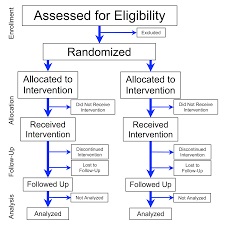
 In a quasi experimental design

 measures