Tag Archives: quantitative data

New book: “Doing Research: A Practical Guide”

Author: Martha “Marty” E. Farrar Highfield

NOW AVAILABLE ELECTRONICALLY & SOON IN PRINT.

CHECK OUT: https://link.springer.com/book/10.1007/978-3-031-79044-7

This book provides a step-by-step summary of how to do clinical research. It explains what research is and isn’t, where to begin and end, and the meaning of key terms. A project planning worksheet is included and can be used as readers work their way through the book in developing a research protocol. The purpose of this book is to empower curious clinicians who want data-based answers.

Doing Research is a concise, user-friendly guide to conducting research, rather than a comprehensive research text. The book contains 12 main chapters followed by the protocol worksheet. Chapter 1 offers a dozen tips to get started, Chapter 2 defines research, and Chapters 3-9 focus on planning. Chapters 10-12 then guide readers through challenges of conducting a study, getting answers from the data, and disseminating results. Useful key points, tips, and alerts are strewn throughout the book to advise and encourage readers.

Primer on Design: Part 3 – Mixing UP Methods

QUICK REVIEW: Research design is the overall plan for a study. And…there are 2 main types of design: 1) Non-experiments in which the researcher observes and documents what exists,

and 2) Experiments when the researcher tries out an intervention and measures outcomes.

NEW INFO: Two non-experimental research designs that are often confused with one another are: 1) cohort studies & 2) case studies. Epidemiologists often use these designs to study large populations.

In a cohort study, a group of participants, who were exposed to a presumed cause of disease or injury, are followed into the future (prospectively) to identify emerging health issues. Researchers may also look at their past (retrospectively) to determine the amount of exposure that is related to health outcomes.

In contrast, in a case controlled study, participants with a disease or condition (cases) and others without it (controls) are followed retrospectively to compare their exposure to a presumed cause.

EXAMPLES?

  1. Martinez-Calderon et al (2017 ) Influence of psychological factors on the prognosis of chronic shoulder pain: protocol for a prospective cohort study. BMJ Open, 7. doi: 10.1136/bmjopen-2016-012822
  2. Smith et al (2019). An outbreak of hepatitis A in Canada: The use of a control bank to conduct a case-control study. Epidemiology & Infection, 147. doi: https://doi.org/10.1017/S0950268819001870

CRITICAL THINKING: Do you work with a group that has an interesting past of exposure to some potential cause of disease or injury? Which of the above designs do you find more appealing and why?

New research: Mindfulness

Check out the newest and add your critique in comments.

“Evidence suggests that mindfulness training using a phone application (app) may support neonatal intensive care unit (NICU) nurses in their high stress work.” https://journals.lww.com/advancesinneonatalcare/Abstract/9900/The_Effect_of_a_Mindfulness_Phone_Application_on.63.aspx

The Effect of a Mindfulness Phone Application on NICU Nurses’ Professional Quality of Life

by Egami, Susan MSN, RNC-NIC, IBCLC; Highfield, Martha E. Farrar PhD, RN

Editor(s): Dowling, Donna PhD, RN, Section Editors; Newberry, Desi M. DNP, NNP-BC, Section Editors; Parker, Leslie PhD, APRN, FAAN, Section EditorsAuthor Information

Advances in Neonatal Care ():10.1097/ANC.0000000000001064, April 10, 2023. | DOI: 10.1097/ANC.0000000000001064

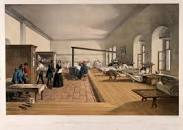
The biggest enemy was not Russia

Check out this explanation of the famous rose plot about preventable deaths of soldiers!! Lessons to be learned today.

How to speak to stakeholders. How to change nursing.

https://www.youtube.com/watch?v=JZh8tUy_bnM

Goldilocks and the 3 Levels of Data

Actually when it comes to quantitative data, there are 4 levels, but who’s counting? (Besides Goldilocks.)

  1. Nominal  (categorical) data are names or categories: (gender, religious affiliation, days of the week, yes or no, and so on)
  2. Ordinal data are like the pain scale.  Each number is higher (or lower) than the next but the distances between numbers are not equal.  In others words 4 is not necessarily twice as much as 2; and 5 is not half of 10.
  3. Interval data are like degrees on a thermometer.  Equal distance between them, but no actual “0”.  0 degrees is just really, really cold.
  4. Ratio data are those  with real 0 and equal intervals (e.g., weight, annual salary, mg.)

(Of course if you want to collect QUALitative word data, that’s closest to categorical/nominal, but you don’t count ANYTHING.  More on that another time.)

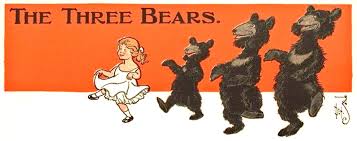
CRITICAL THINKING:   Where are the levels in Goldilocks and the 3 levels of data at this link:  https://son.rochester.edu/research/research-fables/goldilocks.html ?? Would you measure soup, bed, chairs, bears, or other things differently?  Why was the baby bear screaming in fright?

True or False: Experiment or Not

Experiments are the way that we confirm that one thing causes another.   If the study is not an experiment (or combined experiments in a meta-analysis), then the research does not show cause and effect. imagesCALQ0QK9

Experiments are one of the strongest types of research.

So…how can you tell a true experiment from other studies?   Hazel B can tell you in 4:04 and simple language at https://www.youtube.com/watch?v=x2i-MrwdTqI&index=1&list=PL7A7F67C6B94EB97E

Go for it!

[After watching video:  Note that the variable that is controlled by the researcher is call the Independent variable or Cause variable because it creates a change in something else. That something else that changes is the Dependent variable or Outcome variable.]Learning

CRITICAL THINKING:  

  1. Based on the video, can you explain why true experiments are often called randomized controlled trial (RCT)?
  2. Take a look at The Effect of the Physical and Mental Exercises During Hemodialysis on Fatigue: A Controlled Clinical Trial, that is free in full-text via PubMed. How does it meet the criteria of a true experiment as described by Hazel B in the video?

FOR MORE INFORMATION:   Go to “What’s an RCT Anyway?” (https://discoveringyourinnerscientist.wordpress.com/2015/01/23/whats-a-randomized-controlled-trial/ )

Self-Report Data: “To use or not to use. That is the question.”

[Note: The following was inspired by and benefited from Rob Hoskin’s post at http://www.sciencebrainwaves.com/the-dangers-of-self-report/]Penguins

If you want to know what someone thinks or feels, you ask them, right?

The same is true in research, but it is good to know the pros and cons of using the “self-report method” of collecting data in order to answer a research question.  Most often self-report is done in ‘paper & pencil’ or SurveyMonkey form, but it can be done by interview.

Generally self-report is easy and inexpensive, and sometimes facilitates research that might otherwise be impossible.  To answer well, respondents must be honest, have insight into themselves, and understand the questions.  Self-report is an important tool in much behavioral research.

But, using self-report to answer a research question does have its limits. People may tend to answer in ways that make themselves look good (social desirability bias), agree with whatever is presented (social acquiescence bias), or answer in either extreme terms (extreme response set bias) or always pick the non-commital middle Hypothesisnumbers.  Another problem will occur if the reliability  and validity of the self-report questionnaire is not established.  (Reliability is consistency in measurement and validity is the accuracy of measuring what it purports to measure.) Additionally, self-reports typically provide only a)ordinal level data, such as on a 1-to-5 scale, b) nominal data, such as on a yes/no scale, or c) qualitative descriptions in words without categories or numbers.  (Ordinal data=scores are in order with some numbers higher than others, and nominal data = categories. Statistical calculations are limited for both and not possible for qualitative data unless the researcher counts themes or words that recur.)

Gold_BarsAn example of a self-report measure that we regard as a gold standard for clinical and research data = 0-10 pain scale score.   An example of a self-report measure that might be useful but less preferred is a self-assessment of knowledge (e.g., How strong on a 1-5 scale is your knowledge of arterial blood gas interpretation?)  The use of it for knowledge can be okay as long as everyone understands that it is perceived level of knowledge.

Critical Thinking: What was the research question in this study? Malaria et al. (2016) Pain assessment in elderly with behavioral and psychological symptoms of dementia. Journal of Alzheimer’s Disease as posted on PubMed.gov questionat http://www.ncbi.nlm.nih.gov/pubmed/26757042 with link to full text.  How did the authors use self-report to answer their research question?  Do you see any of the above strengths & weaknesses in their use?

For more information: Be sure to check out Rob Hoskins blog: http://www.sciencebrainwaves.com/the-dangers-of-self-report/


Telling the Future: The Research Hypothesis

What is a research hypothesis?   A research hypothesis is a predicted answer; an educated guess.  It is a statement of the outcome that a researcher expects to find in an experimental study.Hypothesis

Why care?  Because it tells you precisely the problem that the research study is about!  Either the researcher’s prediction turns out to be true (supported by data) or not!
A hypothesis includes 3 key elements: 1) the population of interest, 2) the experimental treatment, & 3) the outcome expected.  It is a statement of cause and effect. The experimental treatment that the researcher manipulates is called the independent or cause variable.  The result of the study is an outcome that is called the dependent variable because it depends on the independent/cause variable.

For example, let’s take the hypothesis “Heart failure patients who receive exmeds2perimental drug X will have better cardiac function than will heart failure patients who receive standard drug Y.”  You can see that the researcher is manipulating the drug (independent variable) that patients will receive.  And patient cardiac outcomes are expected to vary—in fact cardiac function is expected to be better—for patients who receive the experimental drug X.

Ideally that researcher will randomly assign subjects to an experimental group that receives drug X and a control group that receives standard therapy drug Y.   Outcome cardiac function data will be collected and analyzed to see if the researcher’s predicted answer (AKA hypothesis) is true.

In a research article, the hypothesis is usually stated right at the end of the introduction or background section.

If you see a hypothesis, how can you tell what is the independent/cause variable and the dependent/effect/outcome variable?question   1st – Identify the population in the hypothesis—the population does not vary (& so, it is not a variable).   2nd – Identify the independent variable–This will be the one that is the cause & it will vary.  3rd – Identify the dependent variable–This will be the one that is the outcome & its variation depends on changes/variation in the independent variable.

PRACTICE:  What are the population, independent variable(s) & dependent variable(s) in these actual research study titles that reflect the research hypotheses:

FOR MORE INFORMATION:  See SlideShare by Domocmat (n.d.) Formulating hypothesis at http://www.slideshare.net/kharr/formulating-hypothesis-cld-handout


Stand & Deliver: Evidence for Empathy in Action

Patient Pain Satisfaction.  It’s a key outcome of RN empathy in action.CARE

Imagine that you are hospitalized and hurting.   During hourly rounds the RN reassures you with these words:We are going to do everything that we can to help keep your pain under control. Your pain management is our number 1 priority. Given your [condition, history, diagnosis, status], we may not be able to keep your pain level at zero. However, we will work very hard with you to keep you as comfortable as possible.” (Alaloul et al, 2015, p. 323).

Study? In 2015 a set of researchers tested effectiveness of the above pain script using 2 similar medical-surgical units in an academic medical center—1 unit was an experimental unit & 1 was a control unit.  RNs rounded hourly on both units.  handsOn the experimental unit RNs stated the script to patients exactly as written and on room whiteboards posted the script, last pain med & pain scores.  Posters of the script were also posted on the unit.   In contrast, on the control unit RN communication and use of whiteboard were dependent on individual preferences.  Researchers measured effectiveness of the script by collecting HCAHPS scores 2 times before RNs began using the script (a baseline pretest) and then 5 times during and after RNs began using it (a posttest) on both units.
Results? On the experimental units significantly more patients reported that the team was doing everything they could to control pain and that the pain was well-controlled (p≤.05). And while experimental unit scores were trending up, control unit scores trended down. Other findings were that the RNs were satisfied with the script, and that RNs having a BSN or MSN had no effect.

Conclusions/Implications?When nurses used clear and consistent communication with patients in pain, a positive effect was seen in patient satisfaction with pain management over time. This intervention was simple and effective. It could be replicated in a variety of health care organizations.” (p.321) [underline added]

Commentary: While an experiment would have created greater confidence that the script caused the improvements in patient satisfaction, an experiment would have been difficult or impossible.  Researchers could not randomly assign patients to experimental & control units.  Still, quasi-experimental research is relatively strong evidence, but it leaves the door open that something besides the script caused the improvements in HCAHPS scores.

questionCritical thinking? What would prevent you from adopting or adapting this script in your own personal practice tomorrow?  What are the barriers and facilitators to getting other RNs on your unit to adopt this script, including using whiteboards?  Are there any risks to using the script?  What are the risks to NOT using the script?

Want more info? See original reference – Alaloul, F., Williams, K., Myers, J., Jones, K.D., & Logsdon, M.C. (2015).Impact of a script-based communication intervention on patient satisfaction with pain management. Pain Management Nursing, 16(3), 321-327. http://dx.doi.org/10.1016/j.pmn.2014.08.008
Introduction to Introductions!

I have a lot of new readers, so let’s revisit the standard sections of a research article.  They are:

  • Introduction (or Background)
  • Review of literature
  • Methods
  • Results (or findings)
  • Discussion & Implications
  • Conclusion

If we begin at the beginning, then we should ask: “What’s in an Introduction?”  Here’s the answer:

“[a] …Background of the problem or issue being examined,

[b] …Existing literature on the subject, and

[c] …Research questions, objectives, and possibly hypothesis” (p. 6, Davies & Logan, 2012)

This is the very 1st section of the body of the research article.  In it you will find a description of the problem that the researcher is studying, why the problem is a priority, and sometimes what is already known about the problem.  The description of what is already known may or may not be labelled separately as a Review of Literature.

KEYKey point #1: Articles & research that are reviewed in the Intro/Background should be mostly within the past 5-7 years.  Sometimes included are classic works that may be much older OR sometimes no recent research exists.   If recent articles aren’t used, this should raise some questions in your mind.   You know well that healthcare changes all the time!!  If there are no recent studies the author should explain.

KEY
Key point #2The last sentence or two in the Intro/Background is the research question or hypothesis.  If you need to know the research question/hypothesis right away, you can skip straight to the end of the Intro/background—and there it should be!

Happy research reading!

Critical Thinking: Do the sections of the abstract AND the sections of the research article match above headings?  Does it match the description of Introduction? Take a look at the free article by Kennedy et al. (2014). Is there a relationship between personality and choice of nursing specialty: An integrative literature, BMC Nursing, 13(40). Retrieved from the link http://www.ncbi.nlm.nih.gov/pmc/articles/PMC4267136/.  question